blog

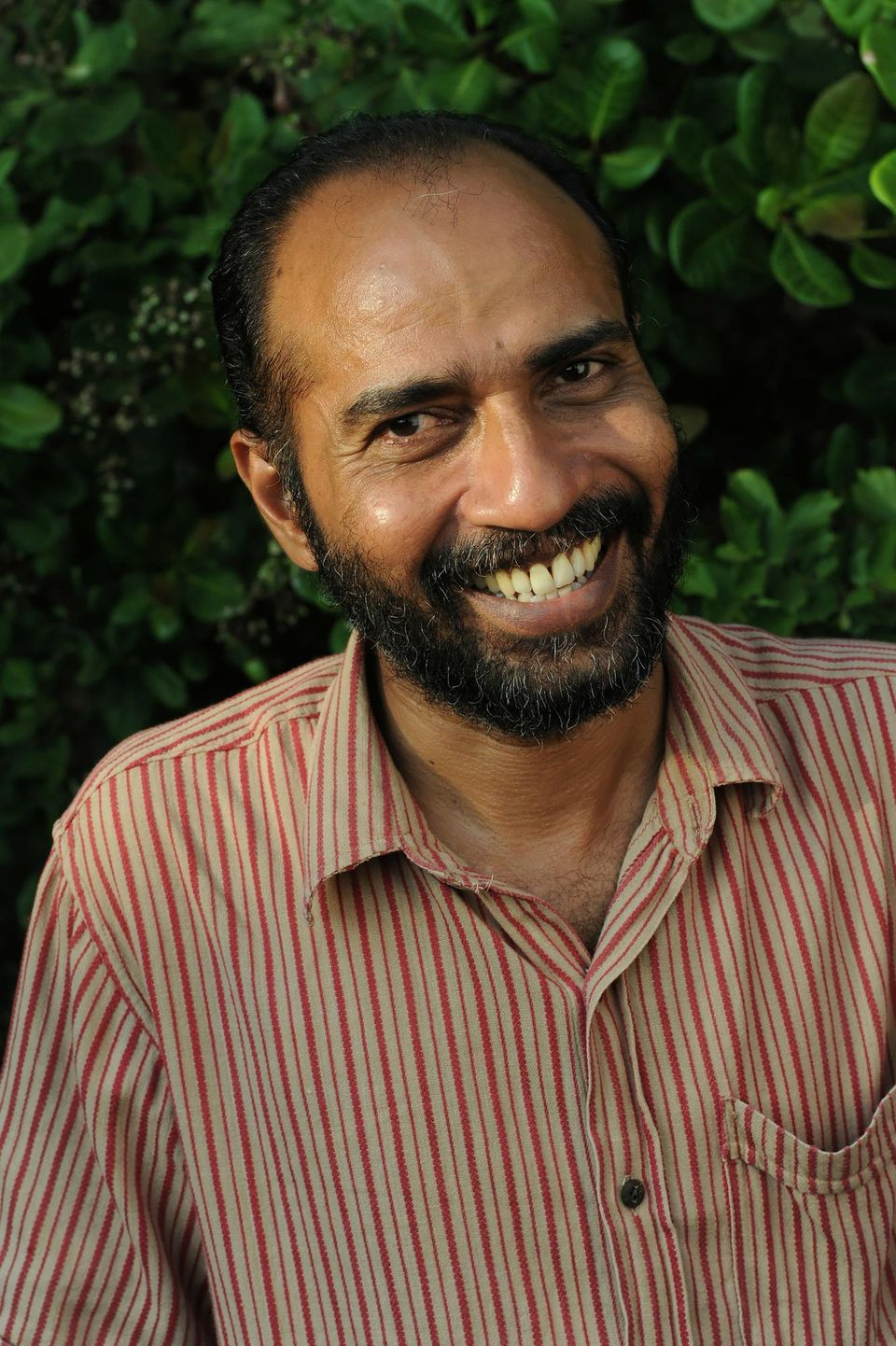
I recently met up with Tomy Matthew who came over to Edinburgh during Fairtrade Fortnight. Tomy is one of the founders of Fair Trade Alliance Kerala (FTAK) and remains the Promoter of the organisation. At our meeting Tomy let me know about FTAK’s plans and the new challenges they are facing. Basically it was all so interesting that it warranted re-launching this blog! This blog will continue to focus on Fair Trade in India and in particular focus on the innovative model that FTAK are developing.

So without further ado, introducing FTAK’s : FAIR TRADE + 3!

This blog post will give you a snapshot of the big idea and the next three blog posts will explore the strands in more detail.

To set some context, over the past few years the Fairtrade certified market has boomed to £1.57 billion in the UK. Great news! However as discussed in an earlier blog post, smaller alternative trading organisations are increasingly struggling to compete with companies who do the minimum to meet the Fairtrade certification requirements (and are therefore often cheaper). So with this in mind the Fair Trade Alliance Kerala farmers realised they needed to go beyond Fair Trade and have launched a three year programme ‘Fair Trade + 3’

The three cornerstones of this programme are:
1. Biodiversity 
Aim: each FTAK farmer should support a farm with the biodiversity of a tropical rainforest

2. Food security
Aim: Each farmer should be a net producer of food. This means they produce the calorie value needed to feed their family.

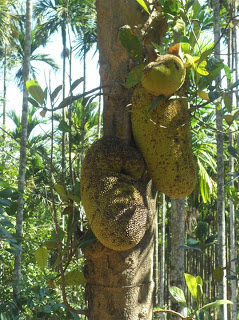
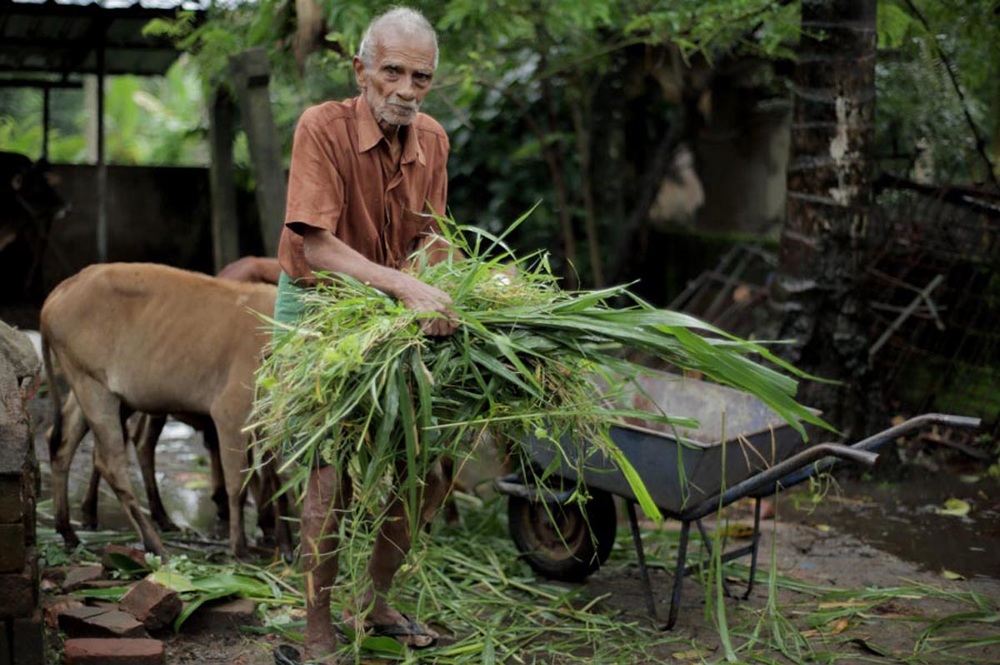
The unusual looking jackfruits!

3. Gender

Aim: Changing power structures so women are able to take on decision making roles

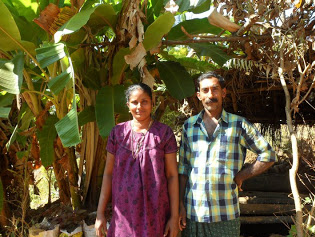
Animma Aroy

I’m really impressed by FTAK’s move to keep innovating and to think and re-think about what the role of food producers can and should be.

Next blog post to come in a couple of weeks time!

View Details

Robert Minhinnick, former editor of Poetry Wales and along with his wife Margaret founder member of Friends of the Earth Cymru, blames his mum. His tongue is only partly in his cheek when he explains how the 86-year-old Porthcawl resident refuses to buy at the Fair Trade shop he and Margaret run in the town. ‘We are,’ he says, referring to most of us in the West, ‘addicted to cheap food.’
Most of those present have heard the arguments before; by and large, the Minhinnicks are preaching to the converted. What is interesting about this discussion, especially when thrown out to the audience, are the complexities involved. Tomy Mathew, who chaired the session brilliantly with a potent mixture of knowledge and good grace, was swift to point out that Fair Trade is not simply an issue between the developing world and the West. ‘It’s about time the Indian middle class – which is 300 million strong – started paying their dues. If we are spending less than ten per cent of our income on food, we need to pay a fair price to the Indian farmer.’
Those in the audience are also eloquent and informed. Many are keen to bring up the issues of farmer suicide – a particular problem in Kerala, with five such cases in the last thirty days. But even this is not straightforward, as an English ex-pat living in a rural part of the state points out; much of this issue is also linked to alcoholism. There is also the complexity of labour issues. Kerala, the first state in India to access the world’s Fair Trade markets, has, at least according to one member of the audience, the right ‘social ambience’ to make such forays a success. With its long-established cash crops – spices, ginger, coffee and the famous Malabar pepper – and strong trade unions, it would seem that conditions are as perfect as they are ever going to be. But of course it is never as simple as that. As one member of the audience points out, the fact that Kerala children are in school while the more relaxed legislation on child labour in neighbouring Tamil Nadu means that simple market forces – as ever – dictate what really happens.
This being Hay, the intricacies of the social, economic and ethical debates are inevitably brought back to the role of the artist. Robert Minhinnick in particular is keen to press his view that in times when he predicts the world’s growing inequalities will ‘blow the lid off many cultures’, writers need to make themselves explicitly political. Tomy Mathew finishes the session by making the point that the festival itself is a ‘fair cultural exchange’ and should serve as a model not just for the exchange of ideas but for righting the wrongs of commodity exchange between India and the British, which has a long history of being unfair.
At the end Minhinnick apologises to his mum. ‘She’s a nice person really,’ he says. However, the next generation will have to live very differently.
(This blog post was part of The Hay Festival, 2011)

View Details

Most people in the Fair Trade movement are aware of the difference between the Alternative Trading Organisations like Divine, Cafe Direct, Traidcraft and Liberation Nuts, and the other Fairtrade certified products e.g. supermarket own brand goods,* although having said this, increasing this awareness to the general public is a different matter! However, in the same way, there can also a big difference in the type of producer groups who are part of the Fair Trade system. Just as there are those at the retail end who do the minimum in order to get the badge and cash in on markets, you can also find the same situation at the producer end. And just as Divine’s market is threatened by Cadbury’s Fairtrade chocolate or Cafe Direct’s by Tesco own brand Fairtrade coffee, so too are Fair Trade Alliance Kerala (and others like them) threatened by those certified producer companies who can offer products at a lower price, basically because they don’t have the high costs associated with doing business in a truly different way.

Despite what the Adam Smith Institute and others think, Fair Trade is part of the market driven competitive world and all must fight to stay in it. Fair Trade retailers must convince the public to buy their product above the other Fairtrade certified goods, and Fair Trade producers must convince the Fair Trade retailers to buy theirs! The producer groups and Fair Trade Organisations who do being a ‘Fair Trade producer group’ or being a ‘Fair Trade Organisation’ the best will necessarily be more expensive and both have challenges ahead about how to fight their corner in the ethical market place. The Fairtrade label’s greatest achievement- to communicate at a glance an ethical seal of approval of a product- is also the main obstacle for those who want to say “yes we are all this but also so much more!”

There has been talk for a long time in the Fair Trade movement about how to differentiate those organisations set up with the sole aim of fair trading, to those who have the main aim of creating wealth for shareholders (at the core these are very different motivations!). And we are getting to a stage where we need to have the same conversations about the producer groups, so that Fair Trade buyers who for so long have asked the public not to fall into the trap of joining the race to the bottom, don’t make the same mistake themselves.

* I’m just using supermarket own brand products as an example but it isn’t a rule that they do only the minimum. Sainsbury’s, for example, were trailblazers in bringing the first Fairtrade certified coffee over from the war torn Democratic of Congo to market and the Co-operative have been key in growing the Fair Trade market.

View Details

When she was good she was very very good, but when she was bad she was horrid.

Such are the highs and lows of the rollercoaster ride that is the world market. Producers climb on with trepidation and along the journey will feel a mixture of elation, despair, fear, gratitude, anger and surprise.

Right now the commodity price situation in Kerala (and globally) is good, very good. Prices are soaring almost across the board; rubber especially is at an all time high and only shows signs of going up and up. Just to give you an example of how much of a rollercoaster it is, 5 years ago the price of rubber was 67 rupees per kg and now it is more than triple the price at 220 rupees per kg weeeeeeeeee! Alongside this coffee, spices and cashews are all healthy.

The farmers of Fair Trade Alliance Kerala (FTAK) are educated about ‘the system,’ organized and will all be able to tell you the world market price. However many other disadvantaged small farmers , who are not part of a farmer organisation, have no means of finding out what the world market price is and instead will have to accept the price given to them by the middlemen who come and collect their crops. Farmers need a democratic organisation, such as FTAK, to act as a mediator between them and the external forces of the world market. Otherwise, unfortunately, even when times are good for many in agriculture, this doesn’t extend to those right at the bottom.

The high world market prices lie in stark contrast to the situation 6 years ago when prices were devastatingly low, lower than the cost of production ,which meant many farmers were deep in a debt that they couldn’t pay off. Father Joy, a local priest and one of the founding members of FTAK explained:

“Kerala farmers are good honest people and when they found they couldn’t pay back their debt they were very unhappy and some were pushed to suicide. This was the same problem in other areas of India, for example with the cotton farmers. This was the reason why we began to mobilize and eventually formed FTAK.”

In contrast now, within the FTAK membership, the problem of farmer debt no longer exists to anywhere near the same extent. And there have been other initiatives by FTAK to set up sustainable sources of micro-credit so that farmers don’t have to rely on unscrupulous money lenders and high interest loans. Also by guaranteeing a minimum prices FTAK is giving its members some sort of security and a means to budget and make investments for the future.

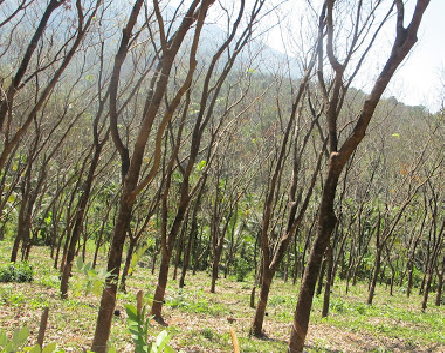
Lots and lots of rubber trees in Kerala!

However the problems don’t just lie in the low prices. There are also problems with very high prices too. As you drive around the Northern parts of Kerala you will start to see a familiar picture of rows and rows of tall straight trees with a white spiral curling around them. Then also many thin spindly newly planted trees as farmers uproot other crops and plant rubber, rubber and more rubber ca-ching! But in doing so the natural biodiversity of the land is eroded. FTAK seek to do something about this and although many of their membership produce rubber, monoculture plantations are not granted membership as FTAK see preserving biodiversity* as integral to their philosophy (and indeed all our futures).

High prices also bring along problems to the 100% Fair Trade Organisations (FTO’s)who already struggle with small margins and fierce competition from regular commercial enterprises, as the Fairtrade mark standards mean they have to pay above the world market price. Regular commercial companies are able to balance the risk of buying fairly traded commodities by simultaneously selling ‘unfair’ commodities. FTO’s  can not do this but to survive, they  must walk a fine line between ensuring that farmers are given a fair deal, whilst also selling things at an acceptable price to Western consumers.  If they drop away unable to compete with the mainstream businesses then producers will lose the companies who are set up precisely to support and grow their organisations.

Similarly the Fair Trade producer organisations, such as FTAK, have invested a lot to build and strengthen their association and membership base. High prices mean that it’s simpler for producers to sell directly to local traders without having the extra burdens that come with meeting the Fair Trade standards. A local trader can undermine the years of good work by the producer organisation in recruiting members away from the Fair Trade co-op.  In this way the partnership element of Fair Trade, which is a two way process, will need to be strong for the relationship to continue.

High prices have to paid by someone and so at some point this will be passed on to the consumer (wherever they are). When the high prices are for staple food crops then the effects are disastrous, we’ve all seen the footage of food riots across the world. And of course the poorest people, including small farmers who grow the crops, will be the worst effected as they have to spend the largest proportion of their income on feeding themselves and their family. To read about an FTAK project which seeks to make disadvantaged farmers more self sufficient click here.

We all know that on a rollercoaster it’s the uncertainty of when we will tip over the top and come soaring down that causes the knot in the pit of our stomach. Fair Trade is the only system that has some sort of security, a safety net, but in return and for it to continue, it needs commitment from all parties, including and most importantly from the producers.

*  Please note that sustaining biodiversity is a Fair Trade Alliance Kerala pre-requisite rather than one from the Fairtrade Labelling Organisation

View Details

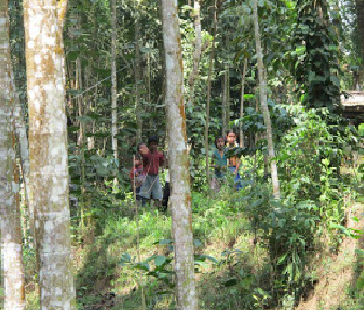
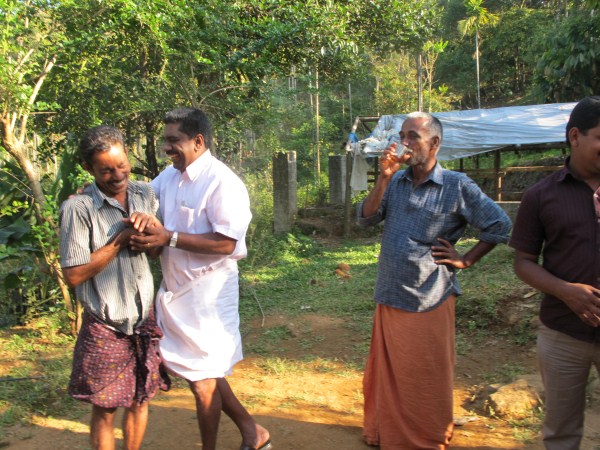
(In the image:Some FTAK farmers that I met in Waynaud enjoying life)

Kerala is a unique state in India. It has lots of things to boast about including a minimum wage, politically active and trade unionized citizens, high literacy etc etc (click here for lots more info). These achievements manifest themselves very visually to the visitor, I have been here for a month and a half and I have seen one beggar and no slums (I went to Mumbai and within the first 3 minutes I had seen 4 beggars, 2 of them beneath the age of 2, and I’d already seen the huge slum from the train window). It has been the subject of discussion for many social scientist and the unique ingredients have come to be known as the “Kerala Model’.

But the problem is, implementing all these standards come at a price and in the big world market race to the bottom, that price is too high to compete. So I sense that Kerala is at a bit of a crossroads; there is pressure from outside and within to do away with some of the rules around labour and wages. To put it into context a farm labourer would get paid around 200 rupees for a day’s work in Kerala, whereas the neighbouring state of Tamil Nadu pays about 40 rupees and so can afford to offer lower priced goods to the world market. So there’s no other option it seems but for Kerala to join the rest of India and do away with these people first policies.

Well hold on a minute… Fair Trade Alliance Kerala, in particular the promoter Tomy Matthew, would like to propose an alternative. There is a market where decent wages, labour rights and unions make you more, not less competitive. This is the Fair Trade market. This small but growing market offers a framework in which commodities that are produced to certain social and environmental standards can succeed.

Beyond Kerala there are other governments who are looking at how to encourage fair trading practices. The Brazilian government passed a law that will promote Fair Trade practices in government and society and other governments, like that in Malawi, resist neoliberal pressures to maintain minimum prices.
With this in mind, there is a conversation to be had about the role Fair Trade can play in preserving sustainable and fair farming practices which are implemented not just on a farm by farm basis, but on a state or even country scale. And the conversation needs to start now before the Kerala model is something just on paper, rather than in the land and with the people.
To read a more full discussion around the issues please email me on kate.fairtrade@gmail.com to receive a copy of ‘Fair Trade and the Kerala Model’ by Tomy Matthew

View Details

This was the topic discussed at a conference in Mumbai that I attended last week, along with about 200 international delegates. Amongst the varied arguments that were put forward, all pulling in different directions, the free market argument was brought up again and again. Will economic growth bring prosperity to the greatest number of people:‘a rising tide will raise all boats’?

I thought I’d stick to the analogy of the rising tide and look at the case of very small producers.

‘A rising tide will raise all boats’ assumes that everyone has a boat.

Small producers don’t have a boat; in this case a boat means access to markets and information on them. As Claribel David from the World Fair Trade Organisation explained, small producers have little or no land, huge price competition, exploitative middlemen, little or no access to credit and poor technology. In short they are in the water, without a boat… or a lifejacket… and they can’t swim. Economic theories proposed by academics don’t have a grasp of the reality on the ground; they take the bird’s eye view, when sometimes it is the worm’s eye view that we need.

As Josantony Joseph, an Advisor to the Indian Commissioner on Food Security, explained in what we’ve seen to date, market liberalization doesn’t seem to help the poor. It only helps people if they have already reached a ‘take off point’, for example you can see that the Indian middle class have an increased standard of life now since India’s economic boom, but yet still 77% of people in India live on less than 16 rupees a day (about 13p… not a lot… the equivalent of 3 cups of chai).

So how does Fair Trade fit in with this analogy? Fair Trade is a lifeboat? No, Fair Trade is trying to do something more than a rescue mission. Perhaps instead Fair Trade is a build your own boat kit, complete with instructions and information (that are much better than your usual flat pack info), and with an onboard navigation system.

If Fair Trade can help overcome some of the disadvantages that small producers face then it gives people the chance to benefit from the market driven world, that is unless Nick Hildyard from The Corner House (UK) is right and in the end turbo capitalism will cause a giant tsunami…?!

View Details

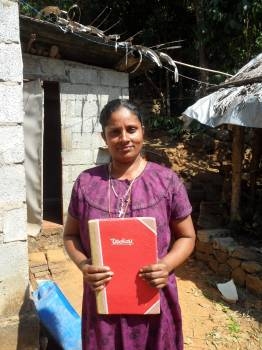
(In the image: Animma Aroy with her cell meeting minute book)

Trade not aid or aid through trade?

This was the challenge from Tomy Matthew, the promoter of Fair Trade Alliance Kerala (FTAK), to a group of visiting Traidcraft campaigners. He put forward that the narrative around Fair Trade, despite an initial acceptance that aid is disempowering, has crept back into the charity ‘help the poor farmer’ version.

Tomy is not alone in his concerns. In answer to the question posed by an interviewer for a Candian radio station ‘if Fair Trade is NOT a poverty alleviation strategy, what is its purpose?’ Frans Van der Hoff, the co-founder of the Fairtrade label,said:

Getting a more democratic system into the market can build upon a world where everyone can live [well]. To alleviate poverty, I never said it, because I hate it, because its a world upside down. First you produce poverty and then the north all of a sudden says we will alleviate what we have produced. No, that doesnt work. No, you have to go to the system which is producing poverty and create a quite different systemIts an endeavor to correct the charity approach of Fair Trade which we hate. I buy so that the poor bugger can have a better deal. Its ridiculous and that we dont want…”

I’m coming back to this topic, that I briefly discussed in the Small Farmers. Big change blog post, as I have just got back from a visit to one of FTAK’s ‘social premium’ projects in the hilly and beautiful Waynaud area. I have come back several pounds heavier from the generosity of my hosts and also with some food for thought.

The farmers’ cooperative decided to spend some of their social premium on a project to see if was possible to increase the earnings of the very small isolated hill farmers of Waynaud; all whom fell beneath the poverty line and who weren’t at that time part of the cooperative. They worked with local partners and selected a strip of land which included 34 farmer families to take part in the pilot. All the families were given the option to buy on credit cattle,pigs, chickens, cash and food crop seeds and were given three years to pay back the loan.

Instantly the families got milk and eggs from the animals which they could then sell and over time they harvested the crops. Depending on their circumstances they selected a mixture of cash and food crops; coffee for example takes 3 years to yield so it’s a longer term investment. Interestingly, and despite the complicated logistics of getting small quantities from these hard to reach farms, FTAK agreed to buy their crops so they were brought into the Fair Trade system, rather than just passive recipients.


The evaluation of the pilot showed some very impressive results, all farmers had increased their incomes and most had managed to more than double it e.g. a farmer named Susamma had increased her income from 19000 Rs in 2008 – 2009, to 34,100 Rs in 2009-2010. The group of farmers also formed a cell and collected a fee from each member every week in order that they can continue to provide micro-finance for future ventures. FTAK will now roll out the programme to other areas.

I was impressed and eek, dare I say it, yes the poor buggers are getting a better deal! I was impressed because it had concrete results, I was impressed because the leader of the cell was a strong smiling woman called Animma Aroy who kept impeccable records and accounts from the repayment and micro credit scheme. I was impressed because the cows and chickens that they got last year now had babies meaning their income would grow again and I was impressed because they’ve set something up that will continue by itself and that brings the most marginalised producers into the Fair Trade system.

The temptation now is fall back into that comfortable ‘save a farmer’ campaign line and write up this case study and shout about it to campaigners, but this would skew the reality of the FTAK farmers as this is just a tiny story from a few members of the 3,500 strong membership so I will resist! But it also shows to me that the social premium can be used to further the core aims of Fair Trade, rather than simply a pleasing distraction.

View Details
Kerala farmer and son

An informal and unscientific poll of the farmers that I’ve met so far in Kerala confirm that within the next decade or two we may be moseying along into a huge farming crisis as  NONE of the farmers thought their children would take over the family business.

Kerala is a bit of an exceptional place as they have universal access to education resulting in 100% literacy. The educated young people inevitably go abroad or to the city to earn better money in office jobs. However that aside we can see this scenario being reenacted across the rest of the globe, for example in the UK and the US the average age of a farmer is 58 and in Kenya it’s 60.

There are lots of reasons for this. In all countries, low prices and the constant uncertain fluctuating market have pushed people away from farming. In others farming is a low status occupation, so even if the returns are good, a job elsewhere is preferred.

Cadbury’s recognized the problem and the threat this insecure situation posed to the long term viability of their business and so decided to invest in the supply chain through the Fairtrade system and also their own cocoa programme. The move, amongst other things, resulted in the Dairy Milk bar achieving Fairtrade certification and meant cocoa farming being a more attractive proposition for workers and young people in the area.

Another difficult truth is that the practically universally agreed with right of access to education for young people (especially dear to Fair Trade supporters), has an unintended other consequence: the traditional skills which for centuries have been passed down from generation to generation are getting lost as people learn about computers instead of farming.

I’m not saying that we should reverse the situation and if I was offered a job as a farmer I would turn it down straight away (pros: nice views, driving a tractor and fresh food. Cons: early starts, bad pay, bad weather, no holidays and never ending long hours). But it does need serious thought and debate in the Fair Trade world and beyond.

What on earth are we going to do when there are no more farmers?

View Details

At one of the farms in Waynaud that I visited I asked Matthew, a cashew, coffee and spice farmer, what difference Fair Trade had made. He answered with two points, one that I expected and one that I didn’t. He said that he now got a better price for his products (tick) but he also said that he now had peace of mind (surprise!)

Surprise because it’s surely meant to be Western consumers who secure peace of mind, not the producer!

Well to set the context, the people of Kerala are highly aware of the potential dangers associated with pesticide use. Through talking to people here (I’m not sure how much awareness there is about this in the UK but a quick search on the Guardian online comes up with a couple of references), I’ve learnt of a national scandal involving the use of a particular government touted pesticide in North Kerala. (Click here for the link and more information on the pesticide name, it seems that the Guardian newspaper is currently being sued by its manufacturers, so on the off chance that this very small blog gets picked up by the big boys I won’t mention endo-shhhhhhhh).

In the Kasaragod district the pesticide was being sprayed over the crops by helicopters and the proper safety measures regarding protecting water sources weren’t taken. In the last few decades there have been a huge number of people with cancer, nervous system disorders and mental health problems and a disproportionally large number of babies born with genetic disabilities in that area.  A charity has been set up for the victims and its worth a visit to their website to understand the nature and tragedy of the issue. Although the government hasn’t officially recognized the problem, there is currently a ban in place on this pesticide.

So for Matthew despite the extra burden of work associated with becoming organic (see my last blog post for weeding moan!) He can now rest easy with his conscience.*

I was really interested in this aspect of organic food. In general the UK debates surrounding the proposed health benefits of organic food focus on how many extra vitamins and nutrients the UK consumer will get for their extra pennies. Although there is some information on the Soil Association’s website about this aspect, the public debate tends to ignore it. However to me this is probably the most convincing argument I’ve ever heard in favour of organic food.  It isn’t an acceptable to trade off: pest free food in return for the lives and health of people.

One final interesting comment by one of the staff members of Elements (the trading arm of the Fair Trade Alliance Kerala) was that when farmers start using pesticides they stop growing their own food. This to me says quite a lot, but I’d be really interested to hear what you think.

* Just to clarify that not all Fairtrade certified products are organic. All the farmers that are part of the Fair Trade Alliance Kerala are also organic; however this is not the case for all Fairtrade producers. Fairtrade recognizes that not all producers are able to become organic so the standards outlaw the dangerous pesticides, including the above alluded to pesticide, and require that producers reduce the amount of chemicals they use as far as possible.

View Details
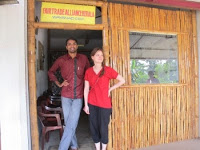
Me and Paul at the FTAK office

I have been in Kerala for just under two weeks and have already visited many Fairtrade certified farms. Kerala is a beautiful place, it’s very green with palm trees everywhere and as you get higher into the mountains, there are tea plantations and forests. The people are incredibly welcoming, in one day we visited 4 farmers and at every stop we were greeted with Chai (automatically comes with about 5 sugars), bananas and snacks and despite knowing no one in India I’ve already been to two weddings!

The thing I was most struck by was just how small scale the farmers are that Fair Trade is working with. They ranged from owning a plot of land of under 1 acre (tiny!) to 7 hectares. The farmers  join together in a cooperative and become a member of the Fair Trade Alliance Kerala (FTAK); all farmers for FTAK are also organic.  The farms are all family farms which take on extra workers (usually neighbours) during the busy times, or as one farmer grumbled, to help with the weeding since they’ve gone organic!

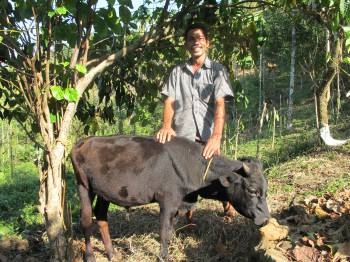
Matthew with his cashew tree

The market that Fair Trade provides these farmers with is vital and the structure and support from the Fair Trade Alliance Kerala (FTAK) is also important, for example one farmer Matthew said that FTAK gave him guidance on which organic fertilizers to use and he has since been able to increase the size of his cashew nuts to meet the required size by the supermarket (the supermarkets strict and often pointless requirements mean that a huge amount of good food gets wasted- but that’s a different blog post!) They are also advised to grow mixed crops (including vegetables for their own consumption) which puts the farmer in a much more secure position as they aren’t reliant on one crop only. When I asked another farmer Pally what had changed since they’d become part of Fair Trade, he said that they now worked together and had much more bargaining power and some sort of voice on the world market through FTAK.

By working with small farmers who then organize themselves into cooperatives you are getting to the crux of the original purpose of Fair trade: to transform power relations so that small farmers are empowered to take action and create a better livelihood themselves. I think perhaps this important message has got lost in the campaign rhetoric around Fair Trade. It’s much simpler to show  a photo of a school that has been built with the Fairtrade premium but this ignores the importance of people coming together, working together, challenging conventional trade and having a voice on the world market for the first time. Unfortunately and this is perhaps one of the reasons why it’s gone slightly out of view, it’s impossible to get a photo which illustrates this!


View Details

It is an unusually hot summer in Kerala, as I write. Heat strokes, unheard of in Kerala until this year, have been reported from several places in the state. For the second year running, Fair Trade Alliance Kerala, that has between its members an estimated cashew yield of over 2000 metric tonnes, will struggle to meet its contractual obligations, indicating another year of crop loss of about half the normal. The reservoirs of our dams are turning in to parched dry beds and the Kerala State Electricity Board, dependent as it is on hydro electric power, is talking of an immediate twenty percent power cut. We are still in March, which under normal conditions should be a benign first month of the summer. Our coffee farmers in Wayanad waited with bated breath last week as a wild fire raged unabated in the adjacent forest for 2 full days. With vast tracts of one of the last havens of the Asiatic elephant reduced to ashes, we expect the hapless jumbos straying in to our farmlands with far greater frequency and wonder what direction the man animal conflict will take this season. With an inflation nearing 20 percent on the food grain prices, any yield loss in cash crops is fraught with dire implications for the food and nutritional security of several farmer families.
Kaalavastha Vyathiyanam, our farmers say. That tongue twister for the average Keralite is our common parlance for climate change. Except that it is more Sanskrit than our mother tongue Malayalam, which could actually come up with half a dozen simpler and more straightforward words to describe the phenomena. It is symptomatic of what happens when we are confronted with the unusual or the incomprehensible: we resort to the language of the priestly class and confine it to the realm of the esoteric.
While the science may be esoteric, the impact is not. It is real, felt. Though it is already here, intuitively we also understand it is something in the making; that the present foretell only inadequately the future misery. Characteristically though, the science is being dealt with in the safe havens where the impact is going to be last and least. As a natural corollary, the mitigation measures suggested too tend to have not just the smugness of those safe havens but also a perverse understanding of cause and concomitant responsibility.
That smugness has been explained in part by two unique features of the unfolding climate change crisis, namely, the unequal nature of the impact and the geographical separation of emission source from environmental consequence: “But global warming is not H.G Wells’s War of the Worlds, where invading Martians democratically annihilate humanity without class or ethnic distinction. Climate change instead will produce dramatically unequal impacts across regions and social classes, inflicting the greatest damage upon poor countries with the fewest resources for meaningful adaptation.” 1
For all the nuanced positioning and posturing by myriad stakeholders in the climate change debate, there is little contestation about what has been emphasized by the UN Development Report of 2007-’08: global warming is above all a threat to the poor and the unborn, the two constituencies with little or no political voice. 2Similarly, there is near unanimity that the challenge of climate change can simply not be met by steps that we consider practical. No matter, what simple and practical steps those ‘feel good do good’ TV spots might advocate, the climate change deity can be propitiated to avert environmental Armageddon only if there is determination to side step the practical and do the necessary.
There is therefore no mistaking the twin nature of the challenge that climate change posits:
i) a planet in peril calls for necessary not just convenient mitigation measures. Now, convenience, in the context of our discussion, has this strange capability to couch itself in an equity garb, against which we must be particularly vigilant.
ii) yet, all that we do must necessarily address the survival exigencies of those least equipped to adapt to climate change; it must be willing to look squarely in the eye the principle of cause and concomitant responsibility.
And the temptation to invert the above order is best resisted.
But tempted if you are to draw a parallel to the above with the red – green debate of yore, it is certainly not far fetched. That debate unfortunately only led to entrenched positions and a stalemate of ideas that crippled action. The burden of this piece is to explore if Fair Trade in principle and ‘Fairtrade’ in practice has the wherewithal to break the stalemate and propel us to action. Specific to our context, can global commodity trade in a climate challenged world chart a ‘fair green’ course?
But first things first and so a reckoning of what could be the implications of committing ourselves to doing what is necessary rather than what is expedient. Let us take on the FAQs of the debate, for it is important to make this as direct, prosaic and nearer home as possible:
Can the world continue to do commodity trade across continents in the volumes it does presently and still hope to save the planet?
– No.
Even if all of it was fairtrade?
– Irrespective.
Can the planet survive if we continue to drink as much coffee, eat as much chocolate, or consume in myriad forms as much amount of sugar as we presently do?
– It cannot.
What if all that coffee, all that chocolate and all that sugar were sold fairtrade?
– Irrespective.
So, here it is in black and white. I re assert, it is a voice from the global South. And it comes from a producer hungry for more and more markets, who cannot stop complaining that Fairtrade sales are just not good enough. Above all, he loves to hear Harry Hill’s knitted character repeat a zillion times – Fairtrade works, what is the alternative? Unfair Trade!
The central issue is not transportation, as is often portrayed. Of course, the massive haulage of commodities across continents is unsustainable. Of course, the food mile advocates have a real case and are right in pressing for answers here and now. (Some of those answers have already come and what appeared to be extremely complex arithmetical jugglery labouring to justify commerce with the third world have now solidified in to incontrovertible evidence. The IIED’s ‘fair miles’ formulation3 will continue to inform the food miles debate in the future reminding every one of the crucial distinction between simple and simplistic conclusions on the environmental footprint of consumer choices. But that is beside the point.)
For in the hierarchy of problems the issue of food miles is lower down the order compared to problems of food security, dwindling forest cover and endangered bio-diversity in the producing origins. The countries of the South can ill afford to be command cultivating cash crops for distant markets as they presently do if we are to still retain our optimism about saving the planet. But do we need more or less of Fair Trade to save the planet?
It is an excellent juncture to digress from the conceptual to the empirical. And to move from the dining tables and supermarket shelves of the West, which still retain its argumentative edge in the debate to the farms and forests in the producing origins to see if another perspective emerges:
The Indian state of Kerala produces just under 20% of its requirement of rice, which is its staple diet. It did not matter, until some years ago. The state’s agriculture was encouraged to tilt heavily in favour of cash crops, for the country needed dear foreign exchange to fuel its developmental and industrialisation aspirations. We grew tea, coffee, spices, rubber, coconut, areca nut… practically everything that had takers in distant markets, but little food for our own consumption. Central Government allocations for the public distribution system, as a quid pro quo for our contribution to the Foreign exchange reserves, and imports from the neighbouring states kept us going. Until our command economy got dismantled, statutory rationing was withdrawn and the universal public distribution system in the state that ensured essentials at affordable prices to the people began struggling to keep itself afloat. The crash in prices of cash crops – we had not just the collapse of the coffee agreement but also the dismantling of the Eastern bloc to blame – was simultaneous. The perils of ignoring the food security of families and communities could not have come in to sharper focus; but as any one familiar with peasant life will tell you, there is no worse time to talk to farmers about food security concerns and the necessity of crop diversity as when the commodity price graph cruises south.
Fair Trade Alliance Kerala, a small farmer organisation comprising of 3600 farmers was set up at the peak of this crisis. The guarantee of a minimum price for cashew, coffee, vanilla and other spices has brought in a small measure of predictability to farmer’s lives. And one of the first uses the premium money found was to fund a group farming effort by the farmers to grow rice and a community kitchen to prepare noon meals for school children. Tubers, seasonal crops that significantly contribute to nutritional security of farming households, have made a significant come back. Delegates at the Global Assembly of INPC – Liberation that FTAK hosted in 2008 were surprised that the agricultural exhibition hosted on the sidelines of the event displayed neither cashew, its flagship export commodity, nor any coffee or spices, which are the other products that they commit to the Fairtrade markets. Instead, the exhibition displayed about 60 indigenous varieties of rice, preserved in precious little amounts by farmers, despite the relentless promotion of chemical fertilizer / pesticide guzzling HYV crops by the government. It displayed at least two dozen tubers, innumerable varieties of bananas, forgotten legumes and ignored wild food. If ever evidence was needed about farmers fair-trading their way in to food secure situations, here it was.
COINACAPA is a Bolivian cooperative of Brazil Nut gatherers. Indigenous communities of Bolivia, Peru and Brazil hold the rights to gather the Brazil nuts from the Amazon forests. The gatherers have formed themselves in to cooperatives but negotiating the international markets have not been easy and most of them are steeped in debt. The livelihoods of the gatherers hinge crucially on a remunerative price for Brazil nuts, and the announcement of Fair Trade minimum prices for Brazil Nuts could not have come more handy. In the absence of remunerative prices, not only will none undertake the risky and arduous task of nut collection, livelihood imperatives will override environmental concerns in people’s approach to the surrounding forests.
Close on the heels of reaching their first container of fairtrade Brazil Nuts to the UK braving rain and land slips, the cooperative along with eleven other nut producer coops from Asia, Africa and South and Central America, pioneered the formation of the International Nut Producers’ Cooperative to take controlling stakes in Liberation Foods CIC, the worlds first ethical nut company co owned by producers. The 2007 Annual General Meeting of the cooperative took place following these momentous events. The focus of the AGM how ever was not prices, not the debts the coop was struggling to repay, not the quality issues that fussy customers were always nitpicking on. ‘The Brazil Nut tree is a patrimony to humanity’, the AGM declared. It must survive and the forests surrounding it must be protected for it to survive. Community strictures evolved about the stewardship of the forests that held the Brazil Nut tree. What hoards of punitive legislation failed to do to prevent the deforestation in the Amazon region could be achieved by the fairtrade guarantee of remunerative prices and fair market access. Even more, beyond their immediate stakes in the protection of the forests, the international peasant solidarity that the fair trade supply chain engendered made the cooperative assert the human connectedness. They were protecting humanity’s patrimony, not just their livelihoods.
Further in Africa, “Fair Trade supports some of the most bio-diverse farming systems in the world. When you visit a Fair Trade coffee grower’s field, with the forest canopy overhead and the sound of migratory songbirds in the air, it feels like you’re standing in the rainforest,”
says Professor Miguel Altieri, Leading expert and author on agroecology. But for a minimum guaranteed price, each coffee crisis will see a bit of that forest canopy disappear as the agrarian crisis in Kerala’s coffee belt of Wayanad showed. The coffee crisis changed Wayanad’s landscape completely. Debt ridden farmers initially selection felled and then increasingly clear felled the shade trees. From the farms to the fringe forests was a short distance and the forest cover dwindled almost irretrievably. Compare that scenario with the ‘Jumbo nuts’ story FTAK talks about now:
The man animal conflict is nothing new in farmlands that adjoin the forests. An entire crop can be wiped out by a herd of deer, wild boar or elephants. With elephants, it could be that your lifetime’s toil can come to naught with perennial crops like coconut, jack, cashew or Mango that have been around for decades uprooted by a marauding herd in the dead of the night. Instances abound of farmers guarding their crop with lethal weapons and resultant law and order problems if they ever are forced to use them in self protection or to save their crops. Some of FTAK’s premium funds went to commission a solar fencing around farms adjoining forest land – a benign deterrent to the elephant and round the year crop protection without sleep less nights to the farmers. Jumbo nuts normally referred to the large sized Indian cashews in the market. The Fairtrade cashews from FTAK are called ‘Jumbo Nuts’ because they are elephant friendly nuts!
Continuing on the bio diversity angle: The Nilgiri biosphere is a natural biodiversity hotspot and plans are afoot for the UN to soon declare it a World heritage. The environmental sensitivity of farming operations here should therefore be a global concern. If you leave alone the cash crop estates of tea, coffee and rubber, the small holder farming in the Nilgiri biosphere was characterised by crop diversity. The homestead farming traditions in this area was the spring bed of biodiversity and the basis for food security of the households and communities. And average hectare sized farm grew on rough count at least 60 varieties of crops, leave alone the shade and wild trees that provided fodder and timber. The immodest green they sport on a rain drenched monsoon day, to the untrained eye, will resemble a veritable rain forest. Next to deforestation, the shift to mono cropping is considered the most significant factor in the environmental devastation of the Nilgiri Biosphere and we can spare research about the cause: Unstable prices and farmers force changing to crops that fetch the better return only to be bitterly disappointed by the time the new crop reaches yielding stage and the prices crash. Coffee farms gave way to cocoa to rubber. Pepper gave way to vanilla; all to no avail. Today, a fairtrade farmer in the Nilgiri biosphere who sticks to homestead farming traditions can, under an enterprising small farmer organisation enjoy the stability of prices for coffee, a dozen tropical spices, coconut, cocoa, cashew and soon for rubber. There is no greater incentive this farmer needs to preserve the fragile ecosystem of the Nilgiri biosphere, one of the world’s biodiversity hotspots.
Take the case, again, of organic farming. That the environmental standards under Fairtrade, with its list of banned chemicals and sustainability criteria should qualify as organic production is beside the point. Apologies, but examples continue to spring from nearer home but the parallels are universal. The farming crisis of the 90’s and first half of the present decade brought home the perils of chemical farming in Kerala. Spurred by grant funds, NGO programmes and government patronage, large scale conversion to organic farming took place in Kerala. The state was in fact, first off the bloc in the country to announce an organic farming policy. The world (as in First World!) is waiting for organic products – convert, certify and enjoy premium prices! Small farmers formed themselves in to collectives to fall under Internal Control Systems that enabled group certification. Certification agencies descended on to the scene and a flurry of enthusiasm, also lot of meaningless frantic action – farm diaries, input registers, irrational head count of every plant head – ensued. And then, nothing happened. No product got sold. All that enthusiasm dissolved in to thin air. After a decade of such frenzied action on the organic front, what have we left to show? There are still organic farming organisations, the steadfast still continue. But almost all of them continue in business because they have had something to do with fair trade! The viability of organic farming, the cause of sustainable agriculture is best served under Fair Trade and it is not just the super market shelves that are underscoring the point, but experience in the producing origins too.
So that is what you hear if you are ‘listening to the grasshoppers’. Fair market access enables communities to trade themselves in to sustainable farming situations and food secure positions even as it propels action towards community control over protection of natural resources. The global south hence needs more not less of Fairtrade especially in a climate challenged world. In fact, the disproportionate burden of climate change concerns that Fair Trade is asked to shoulder is a recognition of its spectacular success in effectively using the instrument of trade to address inequity and poverty compared to most other interventions. If you can do so much, you could do much more is what the food mile advocates, the slow food movement and the deep ecology activists are telling Fairtraders. They are our allies, they sure are. Contrary to popular belief, Fair Trade makes common cause with them. We how ever assert that our relationship with the planet is inextricably linked to our relationship with fellow human beings, which must be reorganised around concerns of justice and fairness.
One of the poignant moments of the Stockholm conference is believed to be the declaration by Mrs. Indira Gandhi, then Indian Prime Minister that poverty is the biggest pollutant. Except that the world wasted about four decades since the dire warnings of Stockholm, chasing the mirage of development as the grand panacea for poverty. Growth in its value neutral form and of lately in its ‘inclusive’ variant has been and is being chased with missionary zeal. Quantity of trade from the South to the North became part of the grand narrative of growth and development supported by massive governmental incentives and grant money. It made millionaires out of export license holders in the Global South, created sweatshops where thousands laboured in inhuman conditions and chemically abused vast tracts of arable land. What is intriguing is that the Stockholm conference was acutely conscious of the equity angle of trade in addressing environmental issues. Principle 10 is explicit:
“For the developing countries, stability of prices and adequate earnings for primary commodities and raw materials are essential to environmental management, since economic factors as well as ecological processes must be taken into account.”
So you could not just trade your way out of poverty. In the absence of stability of prices and adequate earnings for primary raw materials, international trade would only perpetuate poverty and accelerate environmental degradation. Enter Fair Trade, we dare say?
The logic of free trade is Siamese twin to the conventional wisdom surrounding growth and development: Maximising efficiency and comparative advantage will ensure that growth continues unabated and then the all too familiar trickle down theory comes in to effect, which is what the world’s poor should see as their stake in the system. With nearly 3 decades of mission driven praxis, Fair Trade could legitimately claim that it has effectively challenged this logic and it is the common ground we share with the environmental movement, even if we addressed it primarily from the equity and trade justice angle.
So, back to our dry FAQ postures. If the case were that global commodity trade could not grow unabated, in fact, if it might need some stringent curtailing even as things stand now, where do we begin? We must begin I suppose with those products that have minimal or negative impact on our ‘optimal nutrition’, I suppose. And we must be comfortable in acknowledging the reality that the fairtrade product basket as it stands today has quite a few such products.
But with issues of health, food miles, food security and biodiversity, all coalescing in to that coffee bean, we tend to forget history. Coffee cultivation at the producing origins is unfortunately a colonial legacy, and characteristic of commodities with such legacy, a comparatively greater measure of injustice seems to have got embedded in the DNA of its global commerce. Fair Trade understandably did not mandate itself to trade in the feel good commodities of the environmentalists to start with, or even in commodities that contributed to optimal nutrition. It chose coffee where the injustice of trade was the highest.
So, paraphrasing for fair trade’s flagship product, how do we get rid of our caffeine addiction? The global caffeine de-addiction programme for the sake of the planet! There is no mistaking that prescription. It must necessarily start with the world drinking far greater amounts of fair trade coffee than it does presently. Getting all that unfair coffee out of the way is our only hope for producing origins trading their way out of poverty, in to food security, away from mono crop and in to sustainable farming and crop diversity situations. The world cannot but be producing and drinking far less coffee in the bargain.
The challenge cannot be overemphasized: We need to find ways to ensure food security for everybody in a global population that seems destined to push past the 9 billion mark in the foreseeable future. And we need to have the planet in one piece to hold that population. If single-minded focus on growth is an untenable proposition, then our world henceforth will undoubtedly be one that is called upon to do ‘more with less’. Distributive justice and sustainability will be critical elements of the commodity exchange of the future and Fair Trade is a small glimpse of what it might look like.

1 Mike Davis: Who will build the Ark New Left Review Jan Feb 2010 Issue no:61
2 UN Development Report 2007-08
3 See www.chooseliberation.com/harry
4 Big ideas in development : Fair miles – recharting the food miles map IIED

View Details

(Paper presented at United Nations Expert Group Meeting on “Cooperatives in world in Crisis” 28-30 April 2009, New York)

These are reportedly not the best of times for trade and commerce, and it might not be out of place to start by sharing some good news. Amidst the economic down turn that shows just about every sales graph hurtling south, one genre of business, or better, a certain way of doing business, seems to be buckling the trend. It has posted sales growth in 2008 (as compared to 2007) by 24 per cent in Austria, 40 per cent in Denmark, 57 per cent in Finland, 22 per cent in France, 75 per cent in Sweden, 43 per cent in the UK and by 10 per cent in the US.

Yes, Fair Trade1 flows against the economic tide. After surveying 14500 respondents in 15 countries, a recent study by Globescan, indicated the above figures and also surmised that active ethical consumers make up more than half (55 per cent) of the population in the countries surveyed. Consumers are calling for a new model in trade in which justice and equity are integral parts of the transaction, says the Fairtrade Labeling Organisation, releasing the study ahead of the World Fair Trade day on May 9th.

About 7 million people comprising of small farmers, workers and their families in the developing world seem to be the better off today due to Fairtrade compared to others several times their number, who according to the votaries of fair trade, still remain at the mercy of unfair international trade rules. The vast majority of these producers are organised in to cooperatives of small farmers.

What is fair trade?
“Fair Trade is a trading partnership, based on dialogue, transparency and respect, that seeks greater equity in international trade. It contributes to sustainable development by offering better trading conditions to, and securing the rights of, marginalized producers and workers – especially in the South. Fair Trade organisations (backed by consumers) are engaged actively in supporting producers, awareness raising and in campaigning for changes in the rules and practice of conventional international trade.” Along with its above definition of Fair Trade, FINE, an informal Association of the four main Fair Trade networks (Fairtrade Labelling Organizations International, International Fair Trade Association, Network of European Worldshops and European Fair Trade Association) also spells out the strategic intent of Fair Trade thus:
– deliberately to work with marginalised producers and workers in order to help them move from a position of vulnerability to security and economic self-sufficiency,
– to empower producers and workers as stakeholders in their own organisations, and
– to actively to play a wider role in the global arena to achieve greater equity in international trade.”

The Fairtrade Foundation U.K elaborates the concept further: “Fairtrade is about better prices, decent working conditions, local sustainability, and fair terms of trade for farmers and workers in the developing world. By requiring companies to pay sustainable prices (which must never fall lower than the market price), Fairtrade addresses the injustices of conventional trade, which traditionally discriminates against the poorest, weakest producers. It enables them to improve their position and have more control over their lives.”

The fundamental premise of Fair Trade is obvious: global commodity commerce as it exists today is ill equipped to ensure the survival needs of the vast majority of producers of primary goods and services. By institutionalising fair terms of commodity exchange, fair trade seeks to engender conditions where producers and workers in the countries disadvantaged by global commerce are able to create for themselves sustainable livelihood options.

History
It saves effort to reproduce the commonly acknowledged history of fair trade that existed as such since the fifties: Fair Trade started as a partnership between non-profit importers, retailers in the North and small-scale producers in developing countries. Many of these producers were at the time struggling against low market prices and high dependence on intermediaries. They saw Fair Trade as an opportunity to protect their livelihoods, bypass the middlemen and directly access Northern markets. Over the years, more and more Alternative Trade Organisations (ATOs) were created in different countries, often closely linked to volunteer groups and Worldshops. These networks of ATOs and Worldshops played a vital role in the development of Fair Trade as we know it today.

In 1988, in an effort to expand the distribution of Fair Trade products to mainstream retailers, the Dutch ATO, Solidaridad, found an innovative way to increase saleswithout compromising consumer trust in Fairtrade products and in their origins. The organization created a label, called Max Havelaar, which guaranteed that the goods met certain labour and environmental standards. The label, first only applied to coffee, was named after a best-selling 19th century book about the exploitation of Javanese coffee plantation workers by Dutch colonial merchants. The concept caught on: within years, similar Labelling Initiatives such as the Fairtrade Foundation, TransFair and Rättvisemärkt, emerged across Europe and North America in an effort to follow Max Havelaar’s footsteps and boost Fairtrade sales. The organisations launched their own campaigns and certification marks and originally operated independently.

In 1997, these organizations created Fairtrade Labelling Organizations International (FLO), an umbrella organization whose mission is to set the Fairtrade standards, support, inspect, certify disadvantaged producers and harmonize the Fairtrade message across the movement. In 2002, Fairtrade Labelling Organisations launched a new international Fairtrade Certification Mark. The goals of the launch were to improve the visibility of the Mark on supermarket shelves, convey a dynamic, forward-looking image for Fairtrade, facilitate cross border trade, and simplify procedures for importers and traders. The Fairtrade system has always been about
global relationships and global standards of fairness – these were recognised for the first time with an international Fairtrade Certification Mark.

The Fairtrade Certification Mark harmonization process is still under way – as of now, all but three Labelling Initiatives have adopted the new international Certification Mark. Full transition to the new Mark should become reality as it gradually replaces the old Certification Marks at various speeds in various countries.

At present, over 20 Labelling Initiatives are members of FLO International. There are now Fairtrade Certification Marks on dozens of different products, based on FLO’s certification for coffee, tea, rice, bananas, mangoes, cocoa, cotton, sugar, honey, fruit juices, nuts, fresh fruit, quinoa, herbs and spices, wine and footballs etc.2

The how of Fair Trade: Ensuring compliance to Standards
The working dynamics of Fair Trade rests on the authentication of the supply chain consisting of producers, importers, processors, retailers and consumers as built on and functioning according to standards of fairness, transparency and accountability.

This is achieved to through the instrument of standard compliance, the standards themselves being formulated in accordance with the felt realities of producers and workers in developing countries as obtaining in different commodity production situations. In general there are two sets of generic producer standards; one for small farmers organised in to cooperatives or other collectives built on participatory and democratic structures and the other for organised workers of plantations and factories.

Fairtrade labeled goods are the outcome of a structured process that seeks to guarantee that social, economic and environmental imperatives of producing and exchanging goods within the global community in a fair and equitable manner are met. Fairtrade attempts this through a set of standards whose guiding principles have been classified as under:

1)Standards for Social development: For small farmers Fairtrade Standards require an organizational structure that allows the farmers to bring a product to the market. All members of the organization need to have access to democratic decision-making processes and as far as possible participate in the activities of the organization. The organization needs to be set up in a transparent way for its members and must not discriminate against any particular member or social group.

For hired labour situations the Fairtrade Standards require the company to bring social rights and security to its workers. Some of the core elements are: training opportunities, non discriminatory employment practises, no child labour, no forced
labour, access to collective bargaining processes and freedom of association of the workforce, condition of employment exceeding legal minimum requirements, adequate occupational safety and health conditions and sufficient facilities for the workforce to manage the Fairtrade Premium.

2) Standards for Economic development: For all products, Fairtrade Standards
require the buyers to pay a Fairtrade Minimum Price and/or a Fairtrade Premium to the producers. The Fairtrade Minimum Price allows the producer to cover the costs of sustainable production. The Fairtrade premium is money for the farmers or for the workers on a plantation to invest in improving their livelihood. Premium money in this sense is meant to improve the situation of local communities in health, education, environment, economy etc. The farmers or workers decide themselves on what are the most important priorities for them and manage the use of the Fairtrade Premium. Also, Fairtrade Standards require buyers to give a financial advance on contracts, called pre-financing, if producers ask for it. This is to help producers get access to capital and overcome what can be one of the biggest obstacles to their development.This promotes entrepreneurship and can assist the economic development of entire
rural communities.

3) Standards for Environmental development: Fairtrade Standards include
requirements for environmentally sound agricultural practices. The focus areas are: minimized and safe use of agrochemicals, proper and safe management of waste, maintenance of soil fertility and water resources and no use of genetically modified organisms. As part of the environmental standards, there is a list of prohibited materials that Fairtrade Certified producers cannot use for their production. However, Fairtrade Standards do not require organic certification as part of its standards. Higher costs for organic production are considered though, by higher Fairtrade Minimum Prices for organically grown products.

Each product/ product category has specific standards and fairtrade minimum prices and premium form the critical component of the product specific standard, in addition to spelling out standards applicable to unique production and processing issues that that each product/category, entails.

Trading standards stipulate that traders must:
• pay a price to producers that covers the costs of sustainable production and living; • pay a ‘premium’ that producers can invest in development; • make partial advance payments when requested by producers; • sign contracts that allow for long-term planning and sustainable production practices.

Activation of a Fairtrade supply chain can be said to begin with Producers who want to have their product Fair Trade certified applying to the Fairtrade Labelling Organisation. Certification per se is under the purview of FLO-CERT and is operationally independent of FLO whose overall mandate covers the promotion of Fairtrade and the facilitation of producers who want to access the fair trade market. FLOCERT’s assessment covers not just the production of their product and their workplace practices but also the structure, functioning and democratic credentials of the producer organisation based on which certification is accorded or denied. Subsequent annual audits not only confirm continued adherence to the standards, but also assesses organisations for progressive levels of compliance and improvements. Fairtrade standards distinguish between minimum requirements which producers must meet to be certified Fairtrade and progress requirements that ‘encourage producer organisations to continuously improve working conditions and product quality, to increase the environmental stability of their activities and to invest in the development of their organisations and the welfare of their producers/workers’.

Fairtrade standards are developed and reviewed by the FLO Standards Committee, a body constituted from among all stakeholders within the FLO system: FLO’s member organizations, producer organizations and traders, in addition to external experts.

The critical difference
In contrast to Codes of Conduct and other social labels, the Fairtrade Standards are not simply a set of minimum standards for socially responsible production and trade. The Fairtrade Standards go further: they guarantee a minimum price considered as fair to producers. They provide a Fairtrade Premium that the producer must invest in projects enhancing its social, economic and environmental development. They strive for mutually beneficial long term trading relationships. They set clear minimum and developmental criteria and objectives for social, economic and environmental sustainability. Fairtrade Standards need to be met by producers, their organizations and the traders who deal with Fairtrade products.3

Fair Trade – a global cooperative
The vast majority of Fair Trade goods being sold today come from cooperatives. In instances like coffee, incidentally the flagship fair trade product as on date, the product is entirely supplied by cooperatives. Until several new products in the fairtrade basket of recent history were added, Fair Trade producers were synonymous with members of cooperatives. The principles on which cooperatives are founded offered for the ethical consumer the ideal structuring of relations of production of ethically traded goods. As an economic enterprise driven by the social obligations it has to the community of its members, Fair Trade found the cooperatives to be the ideal organisational platform on to which individual small producers could converge
to achieve collective bargaining power and the economies of scale needed to access global markets. In deed as an equal exchange and partnership between producers and consumers across continents, Fair Trade could be described as a globalised cooperative enterprise!

One must hasten to add though that the term cooperative is understood here not in the legally defined form existing in several countries of the South. Democratic assertions of cooperatives in several countries are marred by state interventions and partisan political considerations. Several associations of small farmers in countries like India that are zealous about guarding their democratic character and member control from statutorily sanctioned interventions by state actors opt for organisational structures at variance with the provisions of a legally registered cooperative. It must be in recognition of this reality that the Fair Trade world, while upholding cooperative principles as the defining character of small farmer mobilisation to access fair trade markets, today refer to them as small farmer organisations (SFOs). The resemblance between the organisational standards they are meant to adhere to and the organising
principles of cooperatives, is all too obvious.

As a democratic association of producers mandated to fulfill social obligations to the community of its members cooperatives are the natural constituency of fair trade. The Fairtrade social premium is in fact recognition of the community obligations that cooperatives have or must shoulder. Hundreds of cooperatives across the developing world, whose collectivism was still no match against the reality of globalised market forces and its reflections in their local milieus have used the enabling provisions of fairtrade to help their members trade their way out of poverty. Even more, the fairtrade social premiums have helped them to address long standing social needs of their communities, which were hitherto seen as possible only as entitlements from the state. The empowerment potential of Fairtrade for cooperatives thus goes beyond the increased control that producer collectives are able to exercise over the supply chain; they could now be the true agents of participatory development for their communities. The community needs that are addressed through the utilization of the Fairtrade social premium are collectively decided upon, unlike development prescriptions emanating from quarters unaccustomed to the community’s felt needs.

The fact remains however that Fair Trade has as yet touched the lives of only a fraction of disadvantaged producers in the developing world. Against the killer waves of unequal global commerce fairtrade is still a trickle, at best a small stream. With the small size of the fairtrade market, cooperatives face access challenges and entry barriers springing from the products they have on offer, governing structures that may not readily fit in to standards and domestic legal frameworks. But most cooperatives are deterred from incurring the effort and cost of fairtrade compliance and certification due to the unsure fortunes the foray could bring them. There are more claimants obviously and legitimately than what the system is capable of accommodating. Better infrastructure, facilities for acquiring desired quality
standards, language and communication skills and even cultural compatibility with the ethos of international commerce could give a head start to some, but would be debilitating limitations for others several times their number. The biggest challenge therefore continues to be the fairtrade market size and impressive as the growth rates are, justice in trade concerns still have to increase manifold for the enabling provisions of fairtrade to reach farther and wider and in forms acclimatized to thevaried nature producer realities in the developing world.

Part II

Mainstreaming Fairtrade in origins: the case of a small farmer
organisation from Kerala, India

One central concern that is engaging those concerned with the wider gamut of trade justice issues is the less than desired impact that icebergs of fair trading situations have in the developing world. Will Fairtrade scale up to meet the ever growing challenge is one part of the concern. Equally significant is the worry whether it truly adds up to engendering humane and just conditions of existence and can readily be proposed as a genuine alternative to conventional trade. What follows is an attempt to look at fair trade not in the immediate situations of isolated producer organisations but against the wider challenges that confront organising of economic and social lives in the countries of the Southern hemisphere.

The Kerala model of development
The quality of life enjoyed by the people of Kerala has been the subject of Academic curiosity for some years now. On several key development indices, it seems to match some of the developed economies of the world. The curiosity factor stems from the fact that this has been made possible with a per capita income that is less than the Indian national average. Kerala seems to defy conventional economic wisdom that relates better quality of life with increased per capita income.

‘An enigma within a paradox’
Economic development as conventionally understood has bypassed Kerala. Industrialisation has been minimal and is more or less stagnant at the stage it was in the decade immediately following independence. Traditional industries, be it coir, cashew, or handlooms are in crisis, unable to cope with their mechanized counterparts or uneconomical considering the wage levels prevalent in the state. Un employment is high, and the state has the dubious distinction of having the highest percentage of educated unemployed in the country. Land holdings have been fragmented and cultivated land has been dwindling rapidly in the state.

Yet, the quality of life of the people of Kerala measured against some of the universally accepted parameters like life expectancy, infant mortality, maternal mortality, literacy, subsistence wages, favourable sex ratio, etc, are far better than the national average and in some instances seem to match some of the industrialised west.

Quoting the Kerala Health and Family Welfare Department: “The population of Kerala is uniformly scattered through out the state and is fairly well advanced in its demographic transition. The rapidly declining growth rate, highest mean age at marriage especially of families, a very high level of acceptance and awareness of family planning methods and fertility control, a moderate decline in the mortality rate etc are the commendable achievements in health standards which are almost comparable to that of developed countries in the world. Low birth rate and death rate along with higher female life expectancy, low infant mortality with negligible gapbetween rural and urban and lower levels of disability are the special characteristics of Kerala’s Health Status.

The Infant mortality is an index to measure the physical quality of life, in any given population. In 1995 it is 16 per thousand live births in Kerala – the lowest in the country as compared to the all India figure of 74. The continuous decline in the infant mortality rate from a high of 242 during 1911 – 1920 to as low as 16 in 1995 has contributed to the rapid increase in expectation of life at birth in Kerala. The projected figures are over 73 years of females and 68 for males during 1996-2000 and since again form an important indicator for assessing the overall health situation and quality of life in the state.

The health status of any state can be measured in terms of birth rate, death rate, infant mortality rate, expectation of life at birth etc. Kerala is far ahead of other states in the country and ranks first in attaining low birth rate, death rate, total fertility rate, infant mortality rate and in attaining high expectation of life especially of females. The literacy in Kerala is high and people are aware of their needs, conscious of their status and are generally demanding the services. They are enjoying a better healthier life than their counter parts in the country.”

Distributive justice, agrarian mobilization, rights consciousness, unionized work force, statutory food distribution, universal literacy, universal primary health coverage, etc. have been considered the foundations on which Kerala’s better quality of life edifice has been built.

Model or just a unique experience?
Development literature is keenly divided on the term ‘Kerala Model’ and a growing body of new writing forcefully argues that Kerala’s development path is just too unique to be called a model and of course not to be replicated elsewhere. With neo liberal economic thinking almost going unchallenged, until the cataclysmic events under the shadow which we are meeting today to deliberate on the role of the cooperatives, opinion seemed to converge on the Kerala model: it is unsustainable.

First and foremost, the argument goes, Kerala’s quality of life is unsustainable because it is not matched by economic activity. It defies economic logic. The social security measures Kerala has institutionalised are considered liabilities in the new economic world order. The argument stretches further to demolish just about every institutional founding on which Kerala’s quality of life rests: Organized workforce (read militant trade unionism!) is a liability and is held responsible for the flight of industries from the state. Land reforms, hailed as highly successful and unique in providing land to the tiller is blamed for having limited agrarian holdings and for making agriculture economically unviable. Homestead farming that has been observed as the backbone of food security for Kerala’s households and the spring bed of bio diversity is projected as hindering economies of scale that monoculture commercial cash crop centered agriculture provides. The massive investments the state has made in the social sector is declared unsustainable and every economic prescription from the Central government’s to multilateral agencies’ constantly remind the state that ‘there is no free lunch’.

There is unanimity in their prescription for Kerala: Dismantle the Kerala model or face economic extinction! The opinion makers, the government, the media are actively buying in to the argument. Consequently, investments have been dwindling in healthcare, education, public distribution system, labour welfare and labour protection. The crisis in the cash crop economy, consequent upon the wild speculative fluctuations in the global commodity market has bolstered the argument that international prices cannot support Kerala’s high labour costs. Vast tracts of agricultural land has been giving way to real estate with its disastrous consequences on the food security of the state. Agrarian crisis is assuming alarming proportions and desperate measures by peasants, often misunderstood to be a phenomenon restricted to the cotton belt of India, are on the increase in Kerala.

Fair Trade Alliance Kerala: an effort to protect the gains of the model
Fair Trade Alliance Kerala is the only mass based, farmer led movement in Kerala focusing solely on justice concerns in trade. It is uniquely positioned to offer the fairtrade market high value products, including a range of spices, coffee, cashew and cocoa. It is set amidst unique geographical advantage that produces some of the best quality items of cashew, spices and coffee globally. The farmlands are part of the Nilgiri Biosphere, a global environmental hotspot, where every human intervention must be carefully considered for its impact on the fragile eco system. The organisation draws its membership and movement character from mass movements of farmers in Kerala, especially movements in the forefront of the struggle against rural appropriation and peasant indebtedness.

But what makes the foray of these farmers in to Fairtrade significant is that Kerala possesses a socio economic and political climate where genuine social concerns of Fairtrade have legal sanction and, more importantly, wide social acceptance.

Fair Trade Alliance Kerala, a small farmer organisation created to access the global market on fair and equitable trading terms, intends to use these enabling conditions to try and prove that Kerala’s achievements in the social sphere need not and should not be competitive disadvantages in the new global economy. Thus while the advocates of the neo liberal world order have been telling Kerala to dismantle its social security apparatus to become competitive in a changed global economic order, Fairtrade touts these very attributes as the distinguishing characteristics (USPs in the market lingo) of the production base of the goods its commits to the justice tuned global consumer. Trade unions rights are an avoidable nuisance in the globalised market place and it creates enclaves in producing countries where hard fought and won rights of workers can be dismissed with; fairtrade insists on workers rights to organise as inalienable throughout its supply chain. From child rights to gender equity to subsistence wages, Fairtrade’s certification and inspection regimes ensure that fairness is not just a buzzword but a felt reality for farm, estate and factory workers. Investments in to health care, education and social security measures are wasteful expenditure and competitive liabilities for the liberalised economy; they are the propositions around which goods worth millions of euros, pounds and dollars are being offered on sale to the fairtrade consumers.

Fair Trade Alliance Kerala thus posits the case that the social quality of its goods and
services are not competitive disadvantages but USPs that a justice tuned globalconsumer would identify with. At the macro level Fair Trade Alliance Kerala hopes to create a ripple effect where the growing popularity of Fairtrade would make a compelling case for other regions of India and other parts of the world to proactively focus on concerns of equity and justice as imperatives for long-term survival in the global market place.

Fairtrade plus
From its humble beginnings and niche market status, the fairtrade markets in Europe and the United States have grown dramatically. From an utopian fancy to cornering substantial shelf space in the multiples, from the engagement of a handful of Alternate Trading Organisations (ATOs) to popular brands converting full product lines, Fairtrade has been hailed as the success story of the decade. But growth has brought in its wake its own problems and challenges. Some of the pioneers have felt that the number chase has been at the expense of the core values of Fairtrade. The empowerment potential of Fairtrade has been seen as a casualty and small farmers and their cooperatives that have been painstakingly nurtured by pioneer ATOs are left to cherry picking by the big businesses that have entered the scene. Criticism has also been raised that the ‘big boys’ are entering the fray to ‘fair wash’ their otherwise unpopular business practices.

While for the most part the pioneers of Fairtrade both at the level of the ATOs and the producer co-operatives in the South have responded to the challenge by reasserting the core values of Fairtrade and distinguishing themselves as 100 per cent fair traders, there have also been some unique and creative responses to the challenge. One such has been the effort to increase the say of the small farmers and cooperatives higher up the value chain. An nofficial Gold Standard in Fairtrade is thus emerging, with producer cooperatives as owners of branding companies in the North to which they commit their products. Café Direct was a pioneer in this genre of companies, with coffee farmers owning part of the company and also exercising their say in it corporate governance as Board members. Divine Chocolate and Agrofair followed and today you have Liberation Foods CIC Ltd, a hundred percent fairtrade company marketing edible nuts, 42 per cent stake in which is owned by the International Nut Producers Cooperative, a joint body of nut producing co-operatives from Asia, Africa and Latin America. Fairtrade Alliance Kerala recently hosted the Global Assembly of Liberation and the INPC in a Kerala village. Cashew Nut farmers from Mozambique, El Salvador and India who earlier saw themselves are competitors undercutting each other to lure the elusive northern customer sat across and discussed how cooperation rather than competition needs to be the grounding premise. Peanut producers from Mozambique, Malawi and Nicaragua as also Brazil Nut producers from Bolivia, Peru
and Brazil gazed at the common sky they share in the humid Kerala evenings. If in the pervading gloom of the economic crisis we are able to see a silver lining in that grassroots roundtable, we are definitely seeing the light at the end of the tunnel.

1 The term Fair Trade is used to refer to the Fair Trade movement as a whole and can be used to describe both labelled and unlabelled goods and the work of Alternative Trade Organizations (ATOs), Fair Trade federations and networks such as IFAT, NEWS, EFTA etc. The term fair trade is a broader term often used to describe one or many of the above, but can also occasionally be used to refer to trade justice issues. In such cases, it can be as broad as to describe general fairness in trade, such as tariffs, subsidies, worker rights and other issues. The term Fairtrade is used to describe the certification and labelling system governed by FLO designed to allow consumers to identify goods produced under agreed labour and environmental standards. (Frequently Asked questions – FLO)

2 FAQs (Fairtrade Labelling Organisation)

3 All standards principles as summarised by FLO
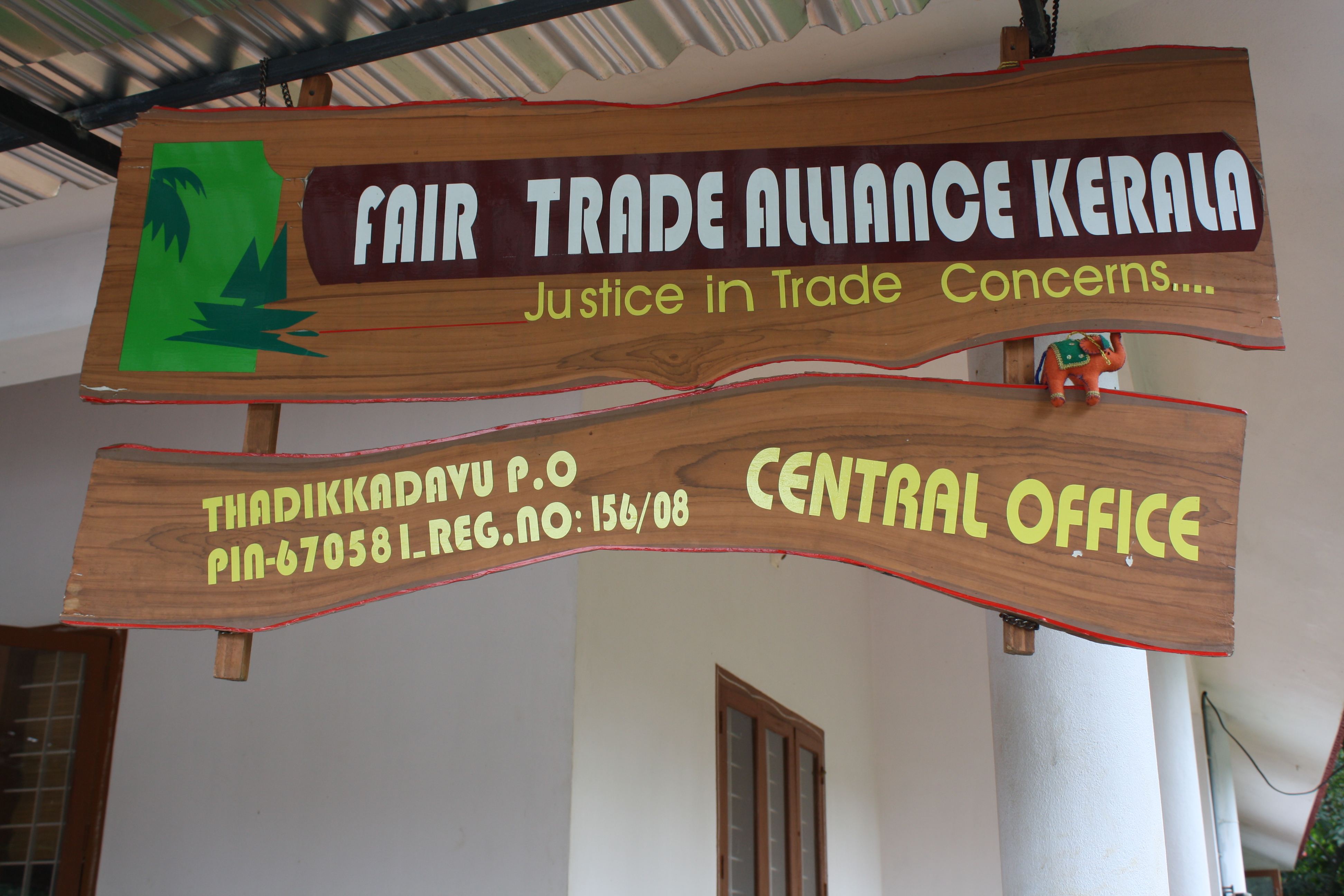
View Details