All posts by Team Liberation

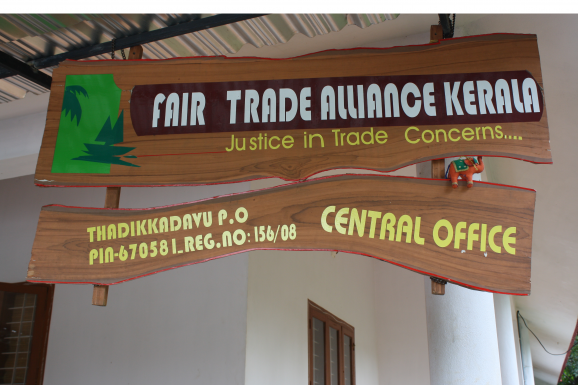
Our shareholder cashew farming co-operative Fair Trade Alliance Kerala (FTAK) has over 7,000 members. Their small ‘homestead’ farms are scattered around the tropical, rugged Western Ghat mountains, a United Nations World Heritage Site.

So it’s not surprising that we meet new farmers every time we go, as well as seeing familiar faces.

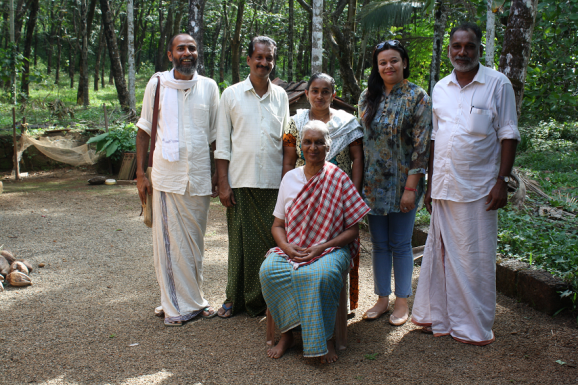
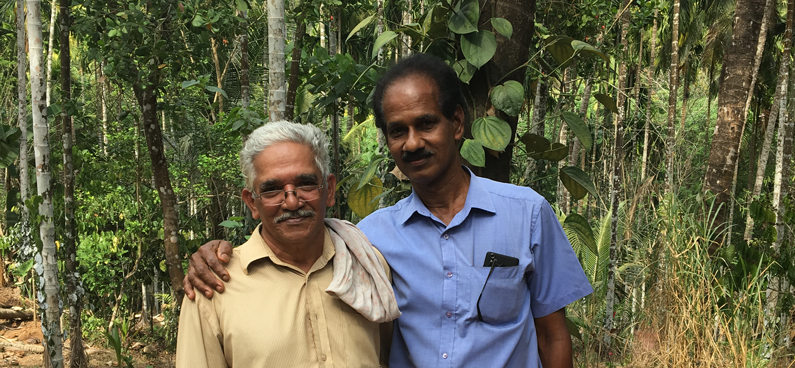
During his recent trip, our Technical Manager Dan met 67-year-old Thomas who has been farming since he was 15 years old. Thomas learned his farming ‘trade’ from his father and grandfather and today farms with his son. He says that, for as long back as he can recollect or has heard, the family did nothing but farming. They are a farming family.

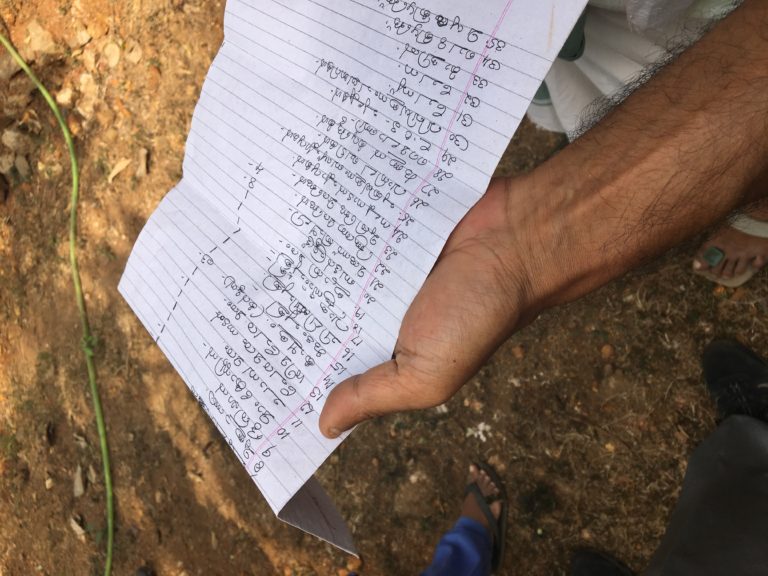
just the first part of Thomas’s meticulously-kept list of all of the over 170 crops he grows on his farm.

Thomas’s favourite time of the year is during the cashew harvest, which falls between February and May. Cashew is Thomas’s most important and lucrative export crop – certainly since he joined FTAK and Liberation and started to sell his cashew nuts under Fairtrade and Organic certified conditions. The crop now provides a secure annual income for the family.

Thomas leads the farmers in his local area in plant and crop diversity. He meticulously records all the crop varieties in his 3-acre farm, which now has over 130 different varieties of crop!

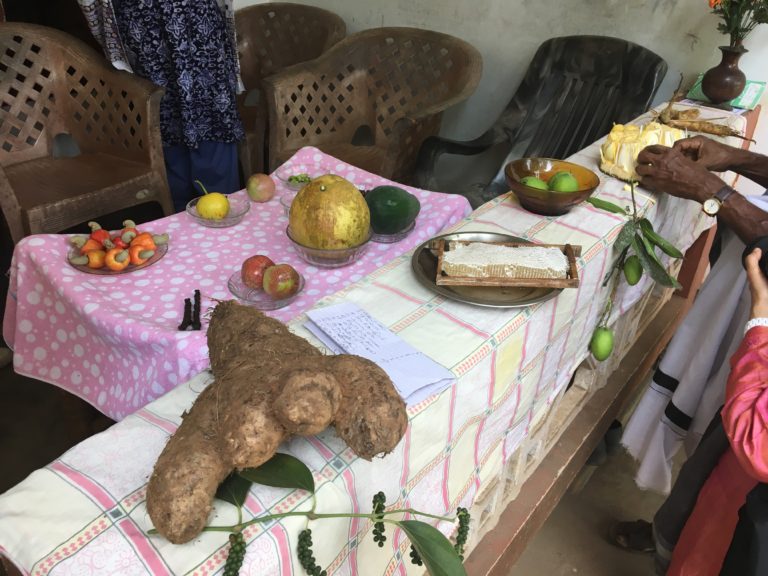
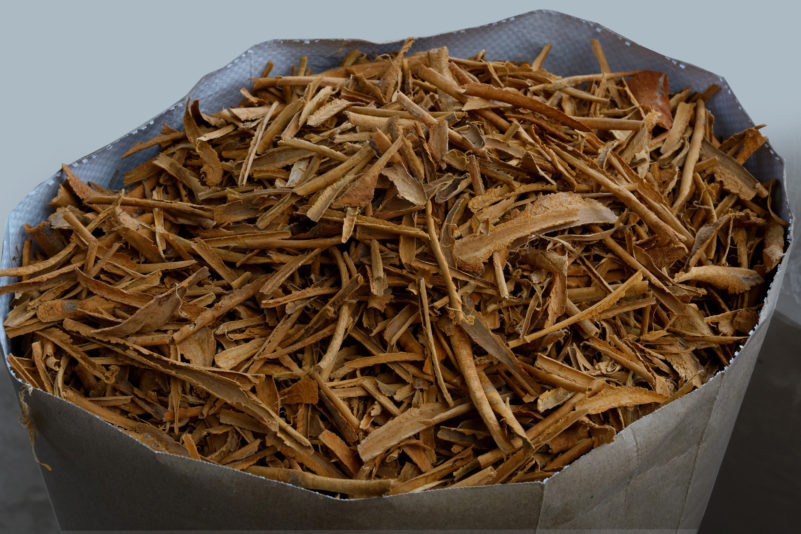
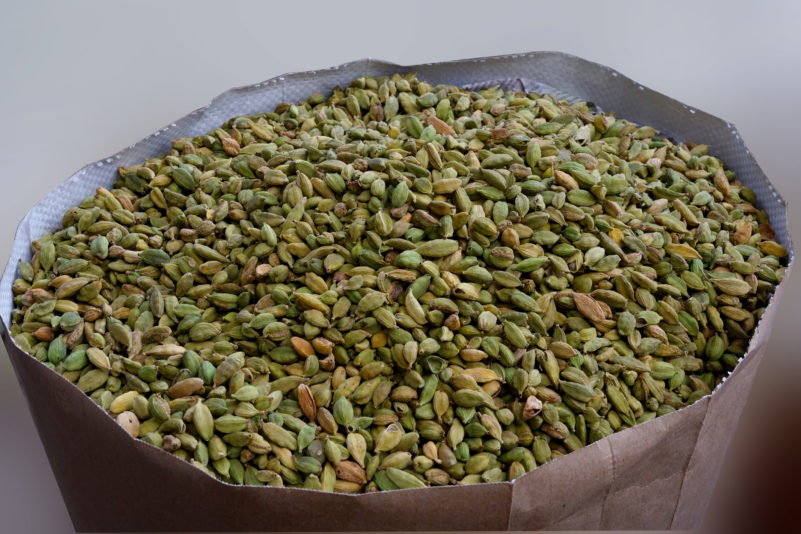
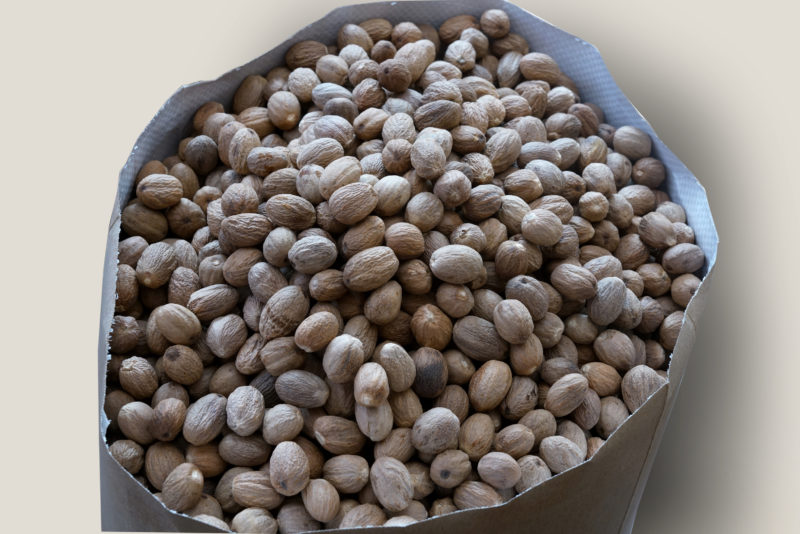
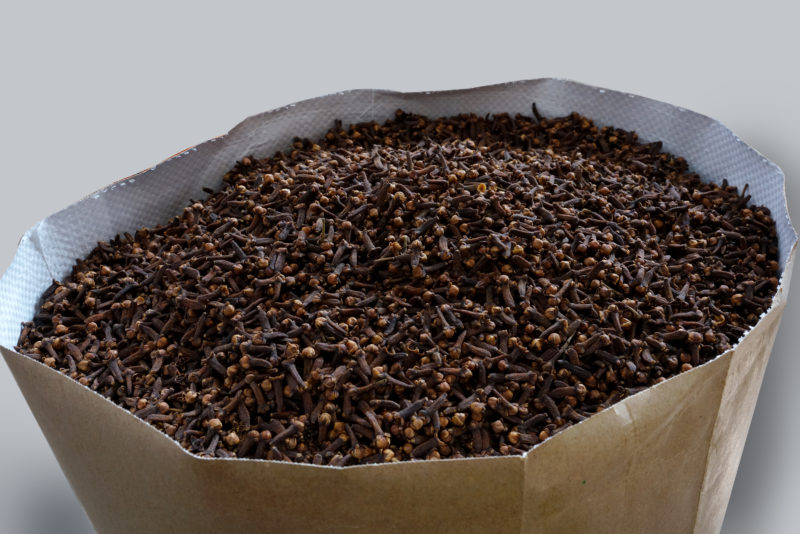
Thomas’s crops include mango, grapefruit, starfruit, yam, jack fruit, pineapple, various potato varieties and numerous spices including cinnamon, nutmeg, clove and ginger – he also produces honey on his farm.

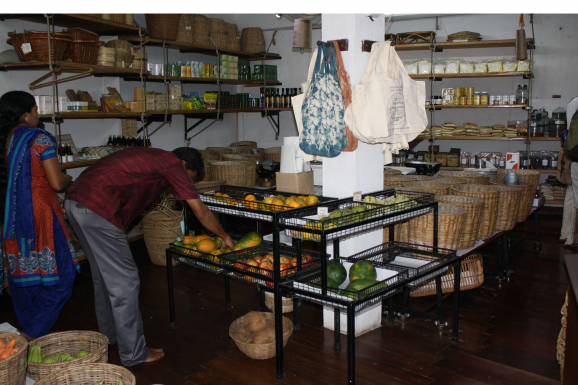
Just a few items of Thomas’s produce laid out in his family home

By being such a champion of crop diversity Thomas is improving his family’s diet, reducing their food bills and reliance on imported produce and really enhancing the quality of his soil. Quite a virtuous circle and one that we are delighted to feel part of. Thank you Thomas.

Let’s celebrate Liberation Nuts

In a nut shell – Liberation Nuts put Fairtrade at the heart of everything they do and we think that’s pretty awesome.

This week we are counting down to World Fair Trade Day and celebrating some of our Fairtrade friends.

Posted by Fairtrade Foundation on Sunday, May 7, 2017

Original article shall be found here: Team Liberation meets Thomas, a cashew farmer in Kerala

View Details

Tomy Mathew is the founder of Calicut’s and Kerala’s first FT Organic Grocery store.  Tomy and his wife Seepja founded Elements in 1999, after moving back from Chennai. The establishment of Elements allowed farmers of Kerala to catalyze the now thriving Fair Trade movement in Kerala.

Tomy’s journey into the Fair Trade movement was birthed from his involvement as an activist in the New Social Movements of Kerala. He was among the founding editors of the avant garde journal Patabhedam, that introduced Kerala to the themes and concerns of the new social movements. This also took him in the early 1990s to the Iraqi Saudi border as a member of the International Gulf Peace team, an interventionist group that worked on the ground in Iraq to stop the war. His experience in Iraq added to Tomy’s awareness of  the the interconnective web of injustice.

In 1999 Tomy returned to his home state of Kerala. Seeing that there was no outlet for selling organic produce, Tomy and Seepja opened Elements. They established Elements to bridge what Elements described as the physical as well as  the emotional distance between the Sensitive Farmer and the Conscious Consumer.

Elements business remained primarily as an organic store until 2003 when a farming crisis, most critically caused by the plummeting prices of agricultural commodities, struck India and particularly Kerala. The crisis caused such volatility in the market, farmers were burdened with mounting debt, incapacitating their farms and families with desperate measures by farmers even ending their own lives. It was at that time that Tomy (and a handful of people involved in the Farmers movements in Kerala) started researching Fair Trade on an organizational level and seeing how it functioned systemically.

Around the same time, Simon Pare, the Director of Max Havelaar France came to India to visit a mutual friend, Balz Strasser (who was researching the small holder farming reality of Kerala). Simon heard about the group’s interest in Fair Trade, and sent Karine Laroche, a staff member of Max Havelaar, to meet with the group of farmers to discuss how best to organize and structure a Fair Trade model.

Meanwhile, the farming crisis was mounting. Farmers in Kerala organized themselves independently under various banners and  took to the streets to protest the organizational systems that were perpetuating and profiting from the crisis. The farmers in the hill tracts of Kerala who primarily grew cash crops for the international markets were in the forefront of these agitations.

It was in this milieu that FTAK (Fair Trade Alliance Kerala) was established. They became formally constituted in December, 2005 and Fair Trade Certified in April, 2006. The organization’s membership was primarily drawn from the mass movements of peasants in the Northern districts of Kerala.

Elements became an Alternative Trading Organization (ATO); a partner and channel for FTAK to organize, negotiate, communicate and execute sales. The FTAK model gained incremental successes because they worked through consensus, giving voice to all members. They negotiated small scale production sales, so as to not boom and bust. Other international FT organizations began to take notice of FTAK, particularly those committed to upholding the small farmer centrality of Fair Trade. Unlike other FT Farmer models, FTAK did not become a Cooperative in its legal sense. In India, organizations that incorporate as Cooperatives (Cooperative Societies) are subjected to host of regulations that can undermine farmers agency and even lead to Government takeover. There are several examples in India of farmer cooperatives or marketing cooperatives being subjected to political control and being subservient to the interests of political parties. Therefore, FTAK incorporated as a Membership Society which protected their status as an autonomous working collective.

FTAK started to gain notice from new customers. A French food packer sought to source all of their cashews from FTAK, which lead to the rapid increase in its membership to about two thousand in its first year (although Tomy and the other promoters would have preferred a more incremental growth in membership). Ultimately, the order from the French company only came to be one container. Regardless, the initial interest forced FTAK and Elements to work overtime to find buyers for the cashews they had harvested in response to the initial request.

Even though FTAK was not yet Fair Trade or Organic certified by 2005, FTAK and Elements were gaining a highly respected reputation as businesses of integrity. They received their first order from CTM Altromercato in Italy before becoming Fair Trade certified, and several entities firmed up orders pending certification, having witnessed first hand the vibrancy and integrity of the organization.

As the prospects of Fair Trade exports loomed, Elements (which was till then a single organic store selling products in Calicut) had to build its infrastructure and financial resources to meet the requirements of a professional business, that could tackle the international market place. Elements needed investor support to maintain the burgeoning infrastructure. Initially, Tomy asked Balz Strasser if he could have a short term loan from his friends in Switzerland. Ueli Baruffol, was happy to be of assistance. Realizing Ueli and Balz’s interest was more lasting and sustainable than just a short term loan, Elements offered them equity participation: 44% equity stakes to 3 Swiss friends, while Tomy and his wife hold the other 56%.

As sales began to steadily grow, FTAK asked its members to think into the future and plan for systemic sustainability. They created what they now call the FT + 3 model. It was a metric for measuring the organizational success of FTAK. The model evaluated not only the effectiveness of FT, but the effectiveness and systemic inclusion and planning for Biodiversity, Food Sovereignty and Gender Justice in their farming, sales and business transactions. It is this model that is in effect today.


Elements continues to broker sales for FTAK, but do so under the edict that FTAK is obligated to seek the highest price they can for the product they are selling. It is not only understood, but expected that if a buyer offers a higher price for a product than what Elements can offer (on behalf of a buyer), prior to signing a contract, that FTAK is obliged to take the higher price offer. This is agreed to as a business practice in order to protect the farmer, and uphold the intention that FT puts the farmer first.

This blog post was written by Kara Powis, our Organizational Development Director, after her visit to the FTAK cooperative, where we source our organic and pure coconut oil for all four varieties of our chocolate truffles.

For more information about Fair Trade Alliance Kerala, check out this recent article in Economic Times.

Original article shall be found here: Fair Trade Coconut Oil: the story behind the creaminess of Alter Eco truffles.

View Details

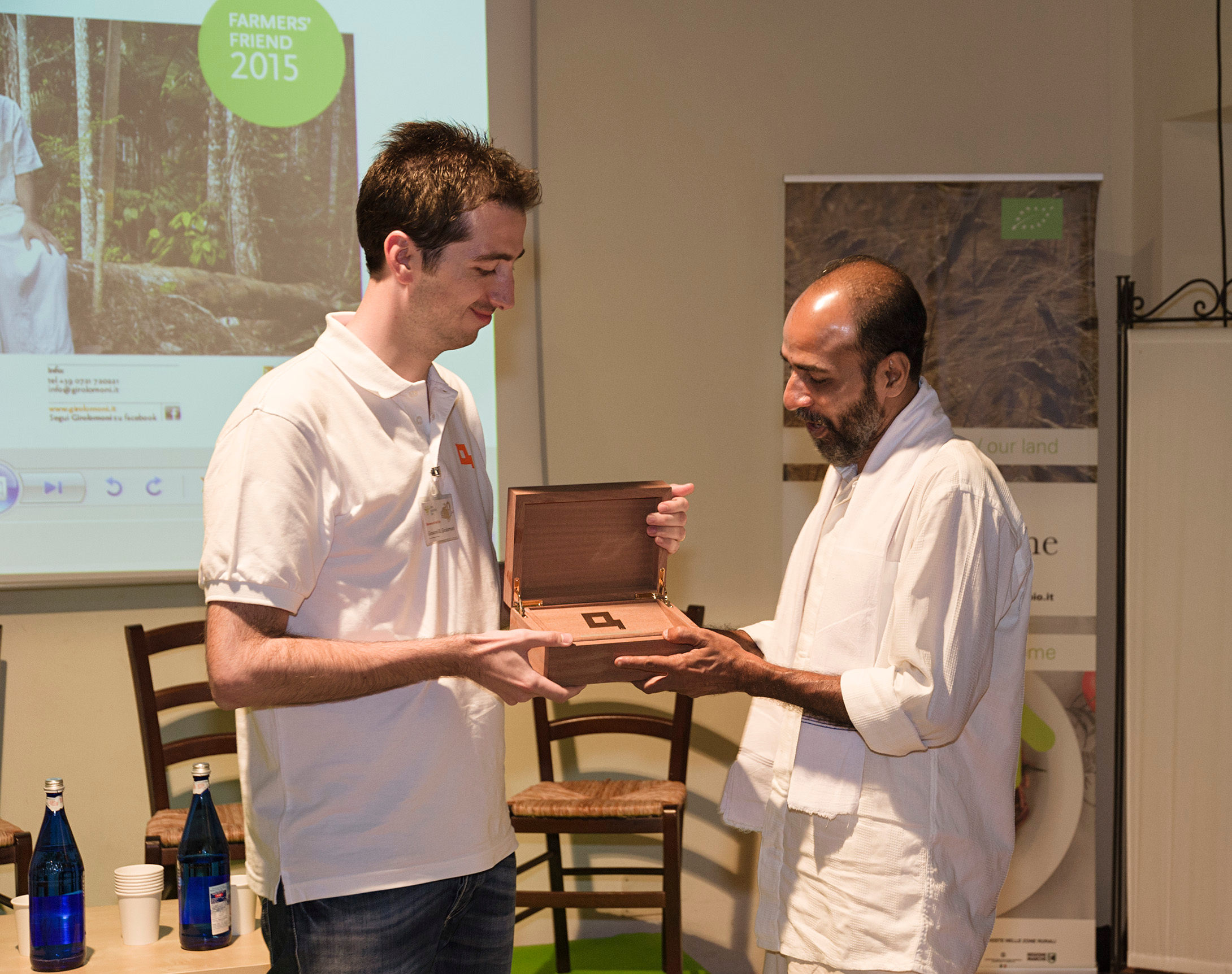
Farmer Friend Award Acceptance Note
Isola Del Piano, 19 September 2015

Dear Fellow travellers in the quest for a sustainable future, I see in the decision of the Girolomoni Co operative and Foundation, to confer me the Farmer Friend award, an act of defiance. We live in times when mega narratives rule our imagination. Of course, the problems that confront humanity are huge and appear to be larger than life. And in the poverty of our imaginations we often tend to think that the solutions too need to be massive, larger than life and therefore difficult to achieve. It almost affords us the luxury of not really doing much about it: what difference can small acts make against the magnitude of the problems we are confronted with? Against that mindset, recognising the significance of a few thousand farmers in a remote corner of the world, involved in sensitive farming practices and responsible stewardship of the soil is surely an act of defiance. It is putting its bet on little women and men and their small stories of endurance, hope and survival and not on the mega narratives of salvation by towering personalities and messiahs.

It is an act of defiance on another count as well: in an age and time when economic progress is believed to hinge only in a competitive framework, where only someone’s loss is seen as another’s gain, this award, in more ways than one, asserts that we can actually cooperate and not necessarily always compete for success. Against the corporatisation of the world, this award upholds cooperation. Against the almost fatalistic belief that free enterprise has only one relevant and worthwhile expression, which is corporate accumulation and expansion, it upholds the values and myriad practices of a sharing economy and of solidarity trade. And amidst the giant roar of corporatisation, in to which unfortunately much of our cooperatives themselves are mindlessly federating themselves, this award recognises the echo of its own tiny bird song of co-operation in a distant land.

Friends, I am truly humbled that you have made me, as the representative of a value based business – Elements and a small farmer organisation committed to justice in trade – Fair Trade Alliance Kerala, an accomplice in this defiance. Thank you.

I have been requested to engage with the theme of bio diversity in my sharing with you today. But I am going to disappoint many of the nature enthusiasts amongst you by discussing as much about the dire need for diversity in the man made world of economics and enterprise as about the bio diversity of the natural world. For it is my firm belief that monocultures of the farms and forests is most predominantly preceded by the monoculture of the economic order and of human enterprise. And conversely, our efforts to preserve bio diversity in the natural world and crop diversity in our farmlands can scarce succeed if we, as I indicated earlier, almost fatalistically, concede that profit has to be the preeminent motive of economic activity and the spirit of human enterprise can find expression only in a competitive frame work that sets humans against humans. Humans against nature is then just a small step away.

And then there is the monoculture of ideas. And against the topic of our discussion today particularly, the monoculture of ideas regarding material progress, growth and development. This idea posits progress as linear and unending and development as the path of redemption from poverty and depravation of what are considered ‘the good things in life’. There is no religion as universal as this; its believers are not affected by their differing views on individualism or collectivism, racial tolerance or intolerance, xenophobic nationalism or universal brother and sisterhood. Development is the super religion of the modern age and unless we draw the courage to call it exactly what it is – superstition, there is little scope for saving a planet in peril or preserving its bio diversity. This organised, institutionalised religion demands an urgent increase in the number of heretics. It is time to rebuild the Babel tower once again – where we speak many languages of human progress, celebrate many ways of finding human happiness and demolish the singular god of development with a new age environmental paganism.

The Girolomoni Co operative and Foundation in some ways to me is that species in the bio diversity of our economic and social institutions that is threatened with extinction, but refuses to die. But it is to such species that humanity will increasingly turn to in times of crisis. The economically high yielding varieties of organisations and businesses have inherent genetic deformities. Exactly like the GMOs. They consume huge amount of resources, they are invasive species that respect neither cultural specificity nor regional distinctiveness. They do not even get their legitimacy from addressing any human need. In fact, they create the humans who are automated to need what they produce. Thus they create this universal consumer: five feet five inch tall, jeans clad, cola sipping, burger munching and now increasingly confined to his cell, err…. I mean cell phone.

But make no mistake, the crisis humanity faces is both structural, and even more significantly, civilisational. And when the world wants to turn to pure, robust strains of economic and social organisations that can help us survive this civilisational crisis we are confronted with; that can help us get back to robust organisational breeds suited to the intrinsic human qualities of justice, co operation and collective survival of humanity as a whole; it will turn to entities like the Girolomoni, to study and understand its DNA, its genetic code and then retrieve such strains to rebuild afresh new communities, new businesses, new ways of creating economic and cultural values and ensuring our collective survival. Prophets like Gino will always be seen in their times to be loners in the wilderness. The enduring legacy they leave behind will remain as the social, cultural and ecological capital of humanity as a whole.

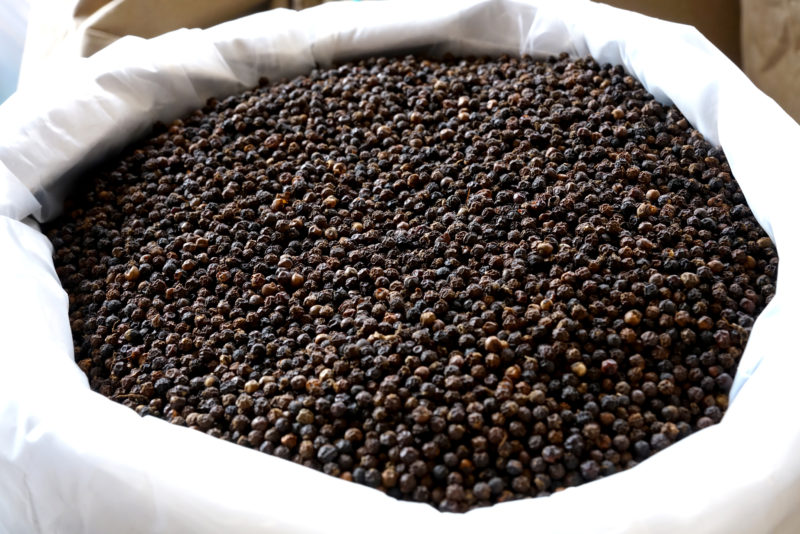
I come from the South Indian state of Kerala. Yes, Vasco da Gama of Portugal landed on our shores, in fact, on the shores of the very town I presently live, over 500 years ago and heralded the advent of colonialism. He came in search of spices, particularly Malabar pepper. But leave alone in the 15th century, as late as during the initial decades of the 20th century, the Malabar region of India, did not cultivate pepper. Our predecessors collected and gathered pepper. Pepper vines thrived in the homestead farms of the Malabar region along with probably a hundred other crops, which had nutritional, therapeutic, and nutraceutical values. A homestead farm in Kerala was a veritable forest farm. It would appear disorganised, not favouring assembly line economies of scale and production and not amenable to organised and efficient methods of manuring, irrigation and harvesting. The fact is, it was actually a nuanced, evolved and intricately engineered system whose nerve center was the family kitchen. And the matriarch, the woman, was the dominant decision maker as to what grew, what was for own consumption, what was to be stored for the rainy days, what was to be shared with neighbours, what was to be fed to animals and what if any remained, the men could take to the market and earn cash returns. This farm forest, this treasure trove of bio diversity, this reservoir of food security is what characterised farming in the region I come from, but is now a thing of the past.

The spoiler: the market! In fact, modern market, as we know it today. Which needed quality and quantity not dictated by nutritional needs or environmental balance or food security of families and communities, but by efficiencies and economies that helped surplus value for a limited few. And suddenly the power equations in the homestead changes completely. The woman has little say in the affairs of the farm. The market dictates and men are the mediators with the market. Notions of value and usefulness change. Hundreds of trees, plants, shrubs and medicinal plants that thrive as wild growth are no more valuable; in fact, they are a hindrance to an orderly, efficient farm that needs to cater to the market. The food basket changes; shrinks. Wild food disappear completely. Tubers diminish. Fruit trees dwindle in numbers – their abundant green foliage is considered unsuitable for shade regulation that enable commercial production. And we add and change crops based on every whim and fancy of the market, never of course managing to beat the market – it is at its own game after all.

Today, Fair Trade Alliance Kerala, the small farmer collective that I work for, is involved in an effort to recapture the homestead farming traditions of Kerala. It is a small dream. We are about 5000 small farmers today. We will soon be about ten thousand in numbers. Small farmers in Kerala have really small holdings – about 3-4 acres on average. So that small dream talks about ten thousand farming families stewarding near about forty thousand acres of farm lands to conditions that are near akin to a tropical rain forest in crop and bio diversity. In the process, we are committed to be net food suppliers, and by food we mean not coffee and pepper and cashew that we grow for the distant markets, but food on the table as rice, fruits, vegetables and tubers for our families and communities. And in the process we are bargaining that women will re assert their due role and space in the management of the homestead farming economy. Bio diversity for us therefore is a food security issue; it is also as much a gender issue.

But what role will the market and trade, particularly international commodity trade play in this scenario that we strive to engender? Undoubtedly the massive haulage of commodities across continents is unsustainable for a climate challenged planet. Food miles and the ecological footprint of our consumption can be ignored only at our peril. But no, I am not proposing that the Italians be denied their favourite espresso. In fact, trade is as much a cultural exchange as it is a commodity exchange and, albeit in reduced volumes, it is here to stay and desirably so.

Let me therefore, as I sign off this evening, give you a glimpse of the salutary effect the type of international commodity trade that I practice and am an ardent proponent of has on biodiversity: Our farmers reside in the Western Ghats region of India and the United Nations recently declared it a World Heritage Site. The environmental sensitivity of farming operations there is critical, not just for us but for the whole world, given the climate challenged times we live in. Much of our farming locations fall also under the Nilgiri Biosphere, a global environmental hotspot. And as is natural for such a region and terrain, a significant portion of our farmlands adjoin tropical rain forests. With the stress that development has brought on the forests, with the forest stretch and forest wealth shrinking rapidly, man animal conflicts have grown. Wild boar and deer pose a problem that farmers even here will readily recognise. But what if a marauding troupe of wild elephants get to your farm and destroy standing crop that is the result of thirty or forty years of toil? That is exactly what is happening in several of our farming locations. And try talking to farmers in such situations about the need for forest and wild life protection and you can imagine the possible hostile reaction. And yet we almost intrinsically know that farmers and wild life have to not just coexist, but also thrive for our environmentally secure future. One of the first investments that was made with the social premium that Fair Trade Alliance Kerala secured by selling its products under the Fair Trade regime to the Italian market through CT M Altromercato was in a benign solar powered fencing between the forest and many of our farm lands. The fence acted as a mild deterrent that kept the animals to the forests. The cashew industry calls big sized cashew nuts, Jumbo Nuts. But in our case, the cashew nuts from farmlands that sensitively manage the man animal conflict are called jumbo nuts not for its size, but because they are elephant friendly nuts.

The fair price that consumers like you pay for our products makes this possible. And that brings me to the parting shot of this wonderful evening with you. A fair price is the best organic manure, through which bio diverse farming can thrive.

Thank you.
Tomy Mathew Vadakkancheril
Promoter, Fair Trade Alliance Kerala
Managing Director, Elements – Fair Organic

View Details

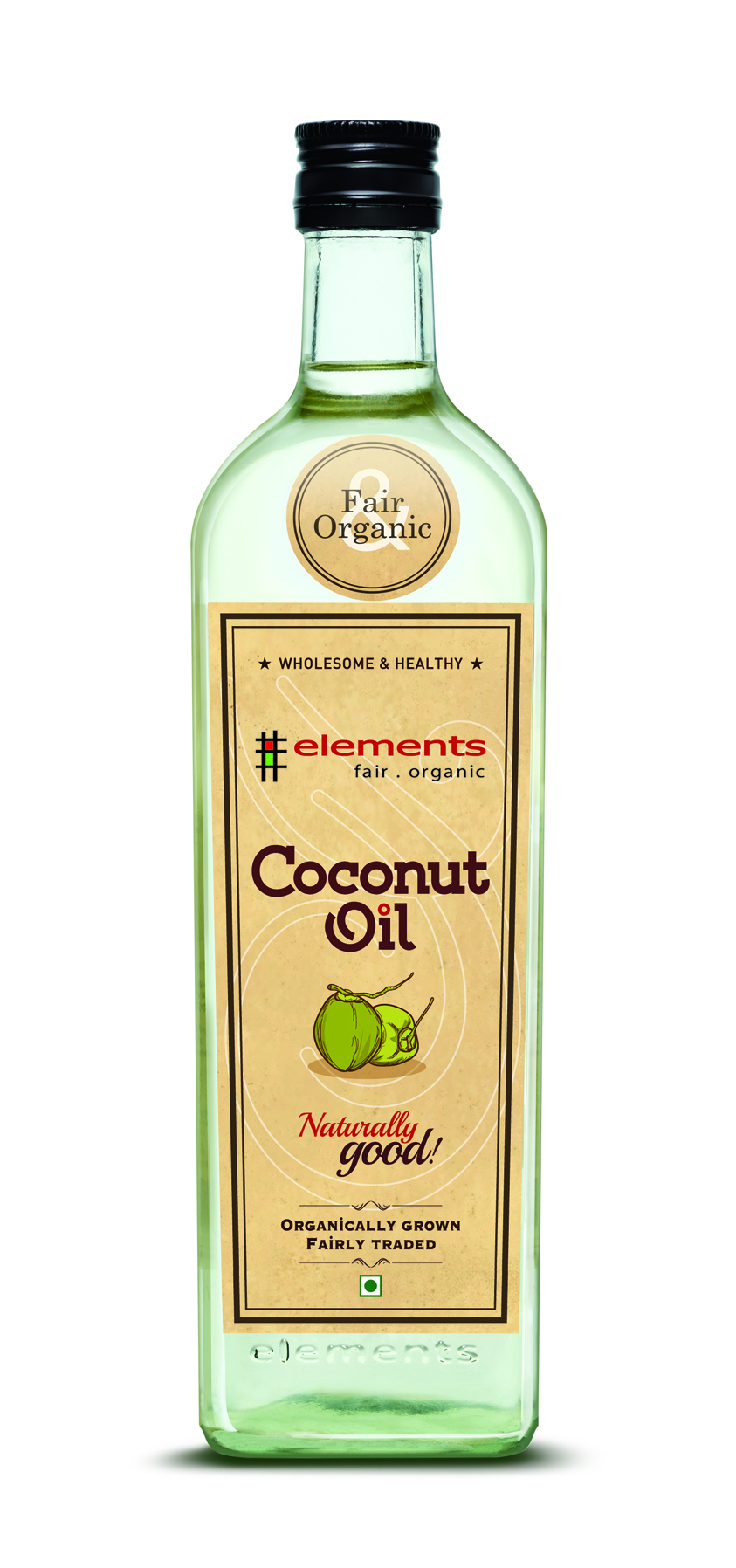
Coconut oil is nothing new, many people have been using it for skin care, hair care, and cooking for quite some time, but recently coconut oil has seen a renaissance of sorts, showing up in more and more stores and at the top of many conversations. But what is the big deal with coconut oil? As it turns out there is a great deal of goodness that goes along with this coconut byproduct. Not only is it what makes the inside of Alter Eco chocolate truffles so smooth and creamy, but it’s also a sustainable alternative to palm kernel oil, containing health promoting properties, and versatility in the kitchen.

Palm oil in its purest form is not detrimental to health, but the way it is produced and harvested is detrimental to the environment and the local economies it envelops. Its popularity has increased due to the fact that it is a high yielding crop, is versatile and has low production cost. Today Indonesia is the number one producer and exporter of palm oil in the world and it is wreaking havoc on their land and the larger environment. The World Wildlife Fund has reported that an area approximately the size of 300 football fields of rainforest is cleared each hour to create more space for palm oil production[1]. But at what price? According to the World Bank, Indonesia is the third largest greenhouse gas emitter globally due to the fact that it has the highest rate of deforestation in the world[2]. The high rate of deforestation is jeopardizing the lives of animal species that are vital to the ecosystem, such as orangutans, Sumatran tigers, Sumatran rhinoceros, sun bears, and pygmy elephants.

As a result of its low cost and high demand, palm oil has become pervasive in all kinds of products including shampoos, soaps, toothpaste, packaged foods and cosmetics. Unfortunately, palm oil is rarely clearly labeled on an ingredients list, so avoiding it at the grocery store can be difficult. In fact, there are more than 170 different names that manufacturers use on their packaging to avoid saying the words “palm oil”. Taking a look at your shower products, almost anything that foams contains sodium laureth sulfate, which is often derived from palm oil. And it can often be hidden under the generic term, “vegetable oil”. According to USDA data the US alone has doubled the amount of palm oil it has imported between 2005 and 2012. The average Western citizen consumes over 22 pounds of palm oil annually.

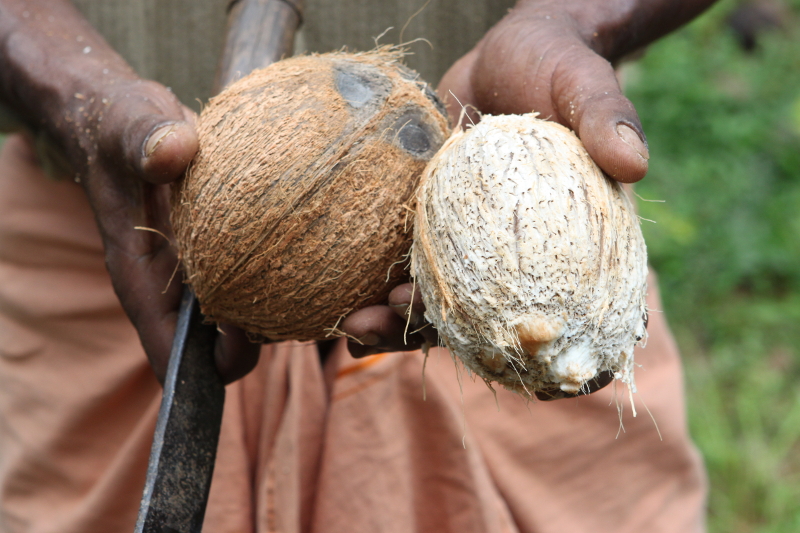
As a renewable resource, coconut oil has become a much more sustainable alternative to palm oil. Coconut trees can grow in almost any soil, even in sandy coastal soils, and can bear fruit for more than sixty years, allowing farming families to sustain their crop through 3 generations. Fair Trade Alliance Kerala (FTAK) on India’s Malabar Coast has been sustainably harvesting coconut since 2005. This farmer-owned co-op practices jaiva krishi, a sustainable farming method that mimics virgin rainforest, where many crops grow harmoniously together, and many animal species — including wild elephants — roam safely.

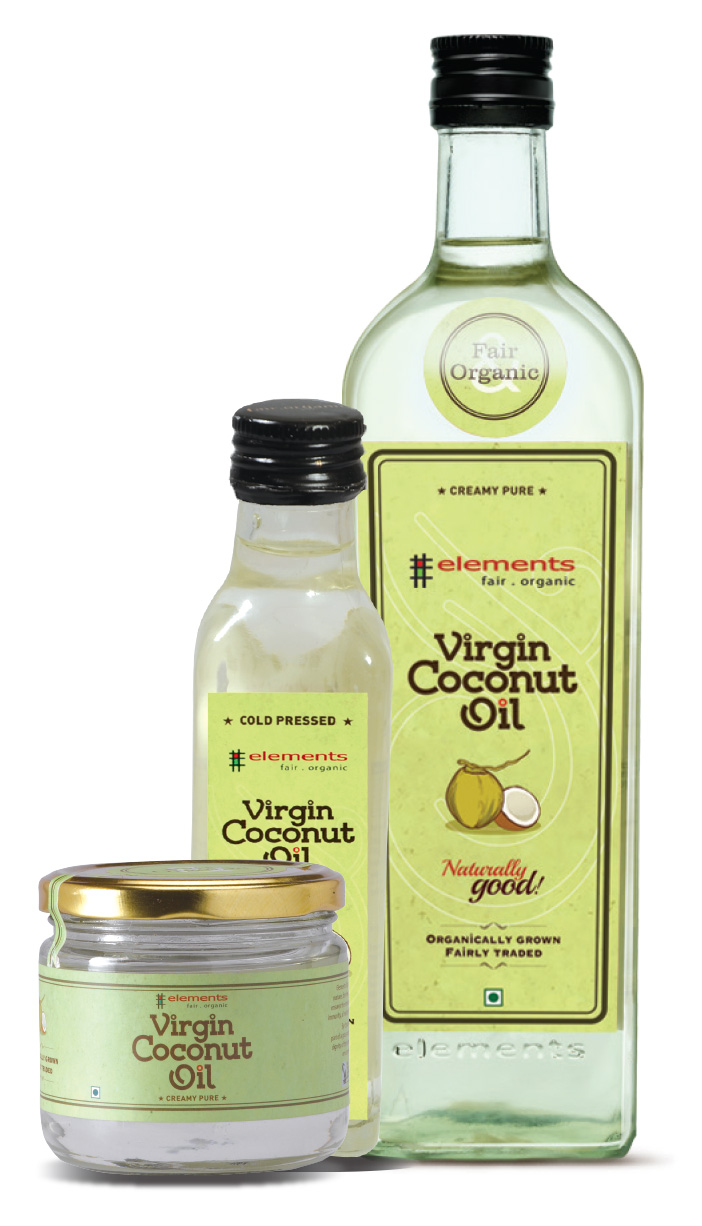
Fair Trade Alliance Kerala is the source of the pure, organic coconut oil found in Alter Eco’s newest chocolate truffles. Once the coconuts have been harvested, split, the meat dried, ground, and pressed this lauric-acid rich oil is the perfect complement to antioxidant-rich dark chocolate. Deep dark smooth chocolate surrounds these sumptuous bite-sized delights. And pure coconut oil, combined with milk and cacao creates the silky-smooth, melty filling. But beyond making our truffles delectable coconut oil is great to use in your own kitchen (if you aren’t already). There are two types of coconut oil you will find in the store: virgin coconut oil and refined coconut oil. Virgin coconut oil has a stronger coconut aroma and imparts a more noticeable coconut flavor in cooking, whereas refined coconut oil is better for cooking at higher temperatures and has a less pronounced coconut flavor. Whether sautéing vegetables or baking, coconut oil is a great ingredient to have on hand in the kitchen and try in a variety of ways. Or you could always just eat a truffle.

Sources:

Fair Trade Alliance Kerala

Rainforest Action Network

Say No to Palm Oil

[1] http://www.saynotopalmoil.com

[2] http://www.saynotopalmoil.com

The original article shall be found here: Demystifying the Delicious: Coconut vs. Palm Oil

View Details
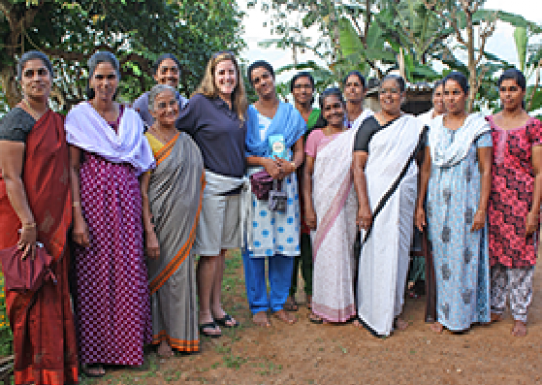
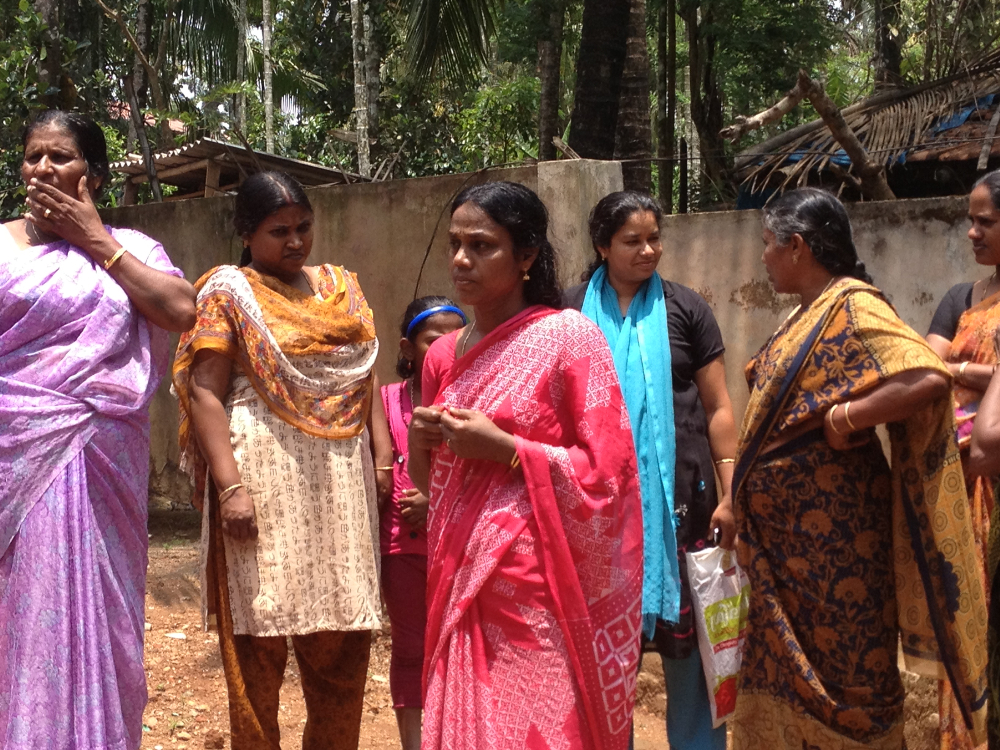
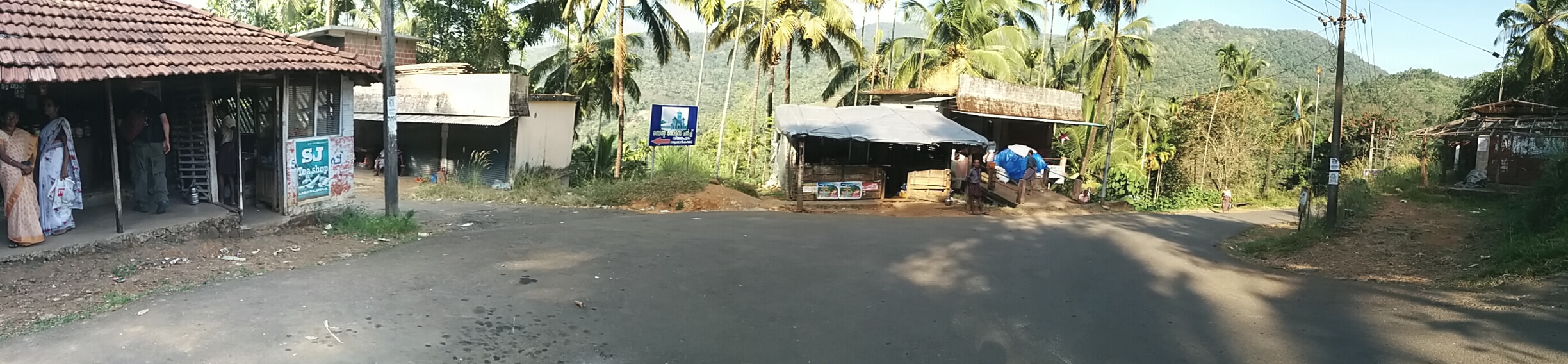
A brief stop on our way back from a meeting with one of the women’s groups organized through FTAK, somewhere between the towns of Kudiyanmala and Vellad.

Fair Trade Alliance of Kerala, (FTAK) a 4500-member co-operative of small farmers in southern India, has created an exciting initiative to articulate and put into practice what most fair trade farmer co-operatives understand empirically. Fair Trade is important but it’s simply not enough. It’s a starting point; a means to an end; certainly not the end itself. Like kicking off the day with a well-balanced breakfast, selling cash crops on fair trade terms is a foundation from which so much else becomes more possible. But, like the role that a healthy breakfast plays in someone’s day, it is what comes afterwards that brings true community empowerment, development, and social change.
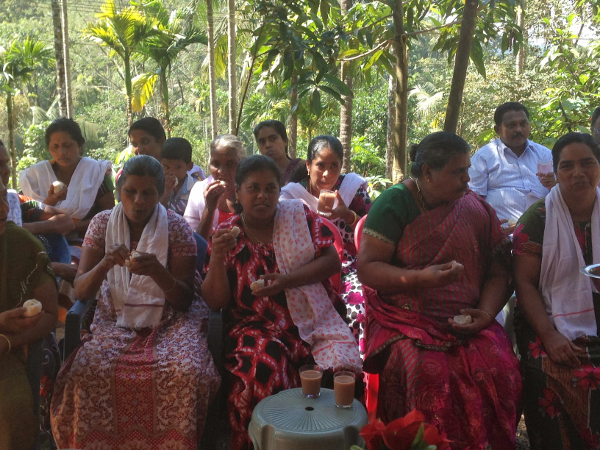
Meeting with the Thalakallu women’s group in the community of Asankavala.

FTAK is not the only Fair Trade co-operative that has initiated specific programs to protect the biodiversity of their regions; ensure that their members have access to diverse sources of locally-produced, nutritious food; and recognize and actively promote the role of women in all areas of family, co-operative, and community life. Many fair trade co-ops carry out programs in some of these areas. However, by consciously articulating their Fair Trade + 3 Initiative in their mission statement, FTAK sends a strong message to their members and the world about their values and priorities. By elevating these issues to the same level as their fair trade program, the forward-thinking Kerala farmers demonstrate that women, the environment, and food security are three interwoven strands, interdependent and of equal importance. Fair Trade is a tool, but a successful co-operative needs many tools in its toolbox.

In December 2013, four of us from Equal Exchange traveled to Kerala where we had an opportunity to spend five days with the farmers of FTAK. We spent many hours traveling through the coconut-tree studded tropical landscape of northern Kerala; meeting with farmer groups, women’s groups, FTAK staff and board; touring small farms lush with fruit trees, wild and cultivated plants, and gardens; visiting cashew and coconut processing plants; and participating in dinners, festivals, and even a party down by the riverside. Throughout all this, we learned about FTAK’s organization and structure, the production and processing of their coffee, cashews, coconuts, and spices which they sell into the local and international market. We shared our views on Fair Trade and learned more about their ideas and initiatives on gender equality, biodiversity, and food security.
Unfortunately, our trip didn’t overlap with the Seed Exchange, one of the most important events that FTAK organizes as part of their Fair Trade +3 initiative. Farmers from all over Kerala save their best seeds throughout the year in anticipation of this agricultural fair. Each January, they then come together to trade seeds, learn new farming techniques, and buy and sell livestock and domesticated animals.

We were pleased, however, with the opportunity to participate in another exciting FTAK activity, the Green Leaf Festival, held at the Ujjaini Auditorium in the community of Kelakam. As its name indicates, the festival is both a celebration of the biodiversity of the region, and a food security initiative designed to bring people together to learn how to identify, prepare and cook with the organic plants that grow wildly on their farms. Walking into this beautiful community center, with its clean white walls, open windows, high ceilings, and full-out party decorations, we could feel the excitement, anticipation, and significance of the event. We were immediately greeted by a few of the women whom we had met the day before in Asankavala. Dressed in the most elegant saris, they welcomed us shyly, but with warm smiles that immediately made us feel comfortable.

Individually, the FTAK farmers don’t own much land, but what they lack in acreage, they certainly make up for in biodiversity. We had seen this when we visited farms where the owners grow herbs and spices, vegetables, coffee, tea, cacao, henna, cashew, coconut, and other fruit trees. In fact, an average FTAK farmer could have as many as 85 different crops and plants on his or her farm. In addition to those plants they intentionally cultivate for personal consumption and income generation, there are many plants that grow wild on the farms. Some of the knowledge about these plants and how they can be cooked or otherwise used has been lost over time.
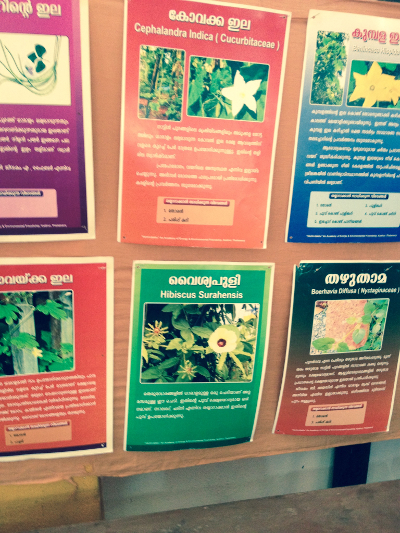
Posters lined the wall, showing the variety of wild plants, and their various properties and uses.

Thus, the purpose of the festival: over a hundred women (and a few dozen men) were invited to participate. They were asked to bring with them a variety of “leafy greens” from their farms that they might not be familiar with, and in small groups, they would practice cooking with them. They were also invited to bring food from their farms to prepare for lunch. The day would end with a huge banquet of food entirely coming from and prepared by the FTAK members.
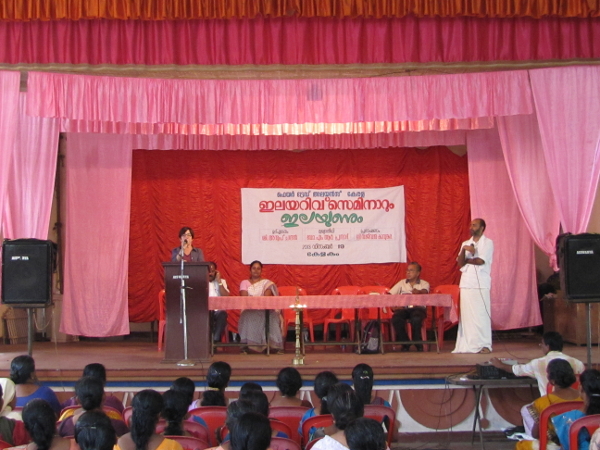
Standing, on the right, Tomy Mathew, founder of FTAK.


In the main auditorium, the event officially began with a formal opening, brief introductions, and some presentations about the Fair Trade +3 initiatives, the importance of food security and resource conservation, and the role of women in all of these activities.

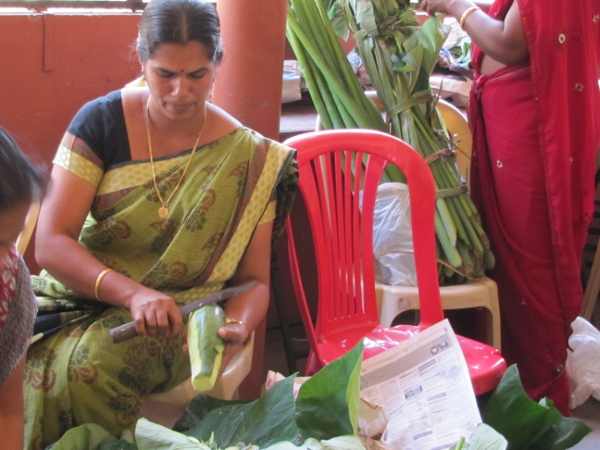
In the meantime, in another room, the real work was happening! All day long, small groups of men and women were washing, chopping, and cooking a variety of food – and many leafy greens! In small groups, they exchanged ideas about the greens and learned to cook them with the idea that they would go back to their communities and train their neighbors. In other groups, women were preparing the food that would eventually become the banquet we would all enjoy before the end of day: everything we ate that day was grown and prepared by the participants themselves.
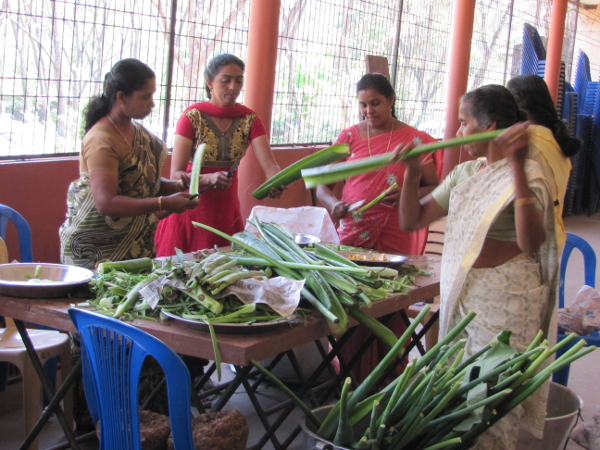
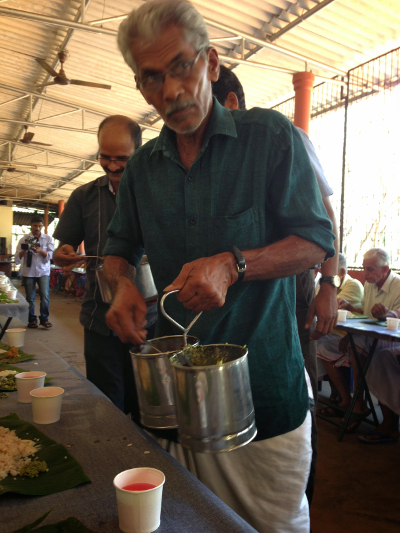
Finally, the formal activities were finished and the eating began! In a flash, the men set up two long rows of tables and chairs. Boom, boom, boom, they lay down paper table cloths, and a large banana leaf to serve as a plate. We all sat down and the men came down the row one at a time, each scooping a portion of some spicy, mouth-watering, vegetarian dish, spiced just right (all spices also coming from their farms). In no time at all, we had finished our meals, and in a flash, the entire paper cloth, banana leafs and food was lifted from the tables, and the tables reset until everyone had eaten their meal.
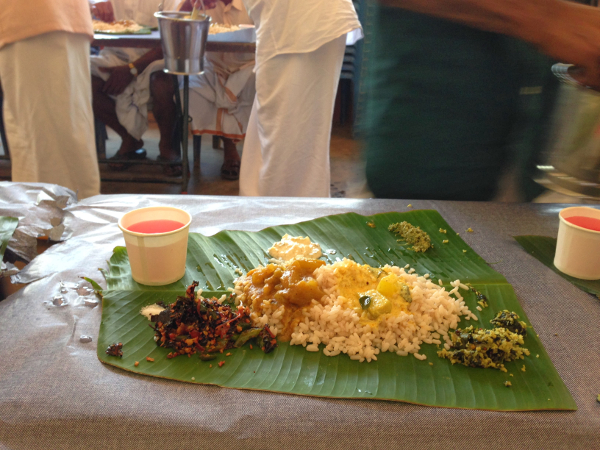
Efficient, economical, and environmental. Zero waste. And delicious to boot!

We had many fascinating days in Kerala and we learned enough to fill an entire notebook on that trip. Coconut processing, cashew processing, visions for the future, challenges, and successes. At another point, we’ll share some of those stories as well.

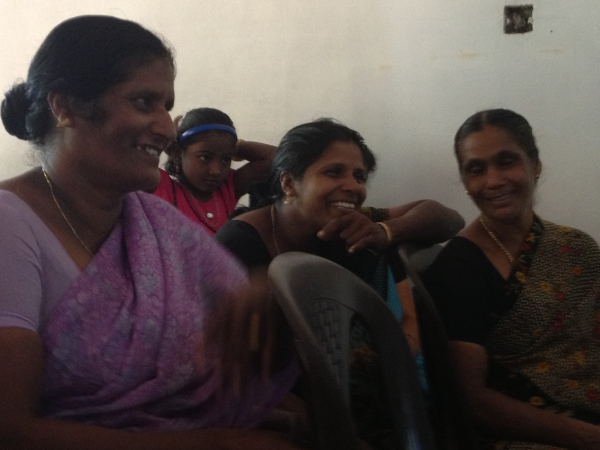
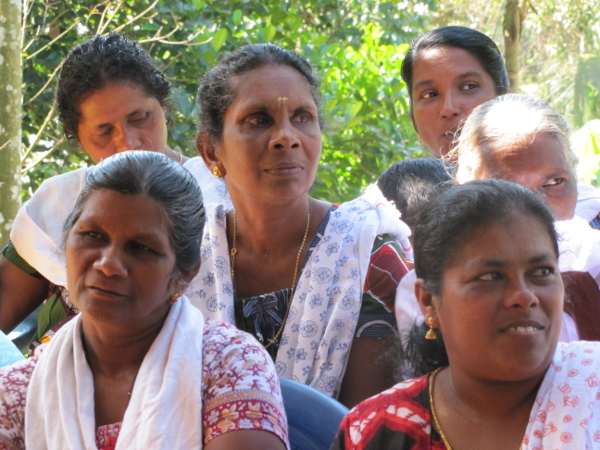
For now, I’d just like to end with some photos of the women we met at the meeting who later were part of the Green Leaf Festival, greeting us like long-lost friends when we saw them in the community hall.
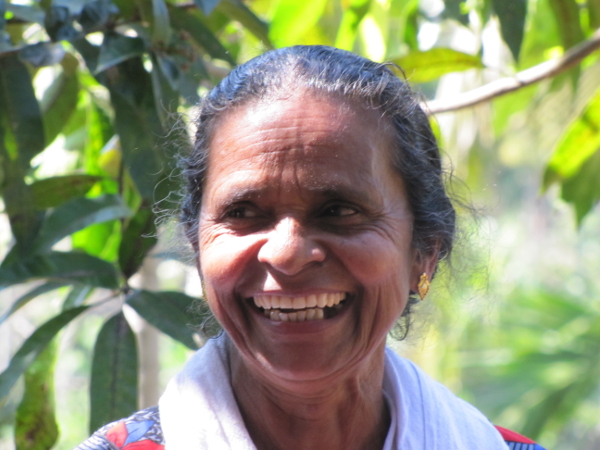
Janaki Kalla
Lissy Joy
Rosamma John


And finally, while I’m on the topic of festivities, here is a one and a half minute video you might enjoy of our bonfire party down by the river. Those FTAK farmers are not just hard working and visionary, but they are full of life, incredibly fun, and such gracious hosts! Thanks to FTAK and to all those of you who buy our cashews and help support this entrepreneurial and innovative small farmer co-op!!!


Thanks also to my colleagues and traveling companions, Wells Neal, Deepak Khandelwal, and Rink Dickinson! Photos taken by Wells, Deepak, and Phyllis. Riverside video put together by Deepak Khandelwal.
View Details

In April 2012 I visited Wayanad in Kerala and meet the Pulpally women’s group and learnt about FTAK’s ‘Fairtrade plus 3’ policy, in particular to distribute Fairtrade premiums as loans for livelihood development through women’s projects . See https://www.facebook.com/notes/equal-exchange-uk/gender-justice-at-fairtrade%20-alliance-kerala-ftak/10150672014243344 and similar for reports.

The ladies were thrilled with their success then and now I wanted to hear how their work was progressing a year later.

Our party (Tim and Martin from Fairtrade Foundation) myself, Tomy Mathew, and Paul (the FTAK district officer ) met them again . All smiles as we started the meeting. There was an air of excitement presenting to visitors again.

Philomena began by reporting on the previous meeting, describing loans repaid, decisions made and noting that they had to decide who was going to the FTAK office inauguration the next day. Apparaently there were only 6 places for the members and they all wanted to go.

The group had applied for a loan from the Fairtrade premium fund via the local panchayat board of FTAK, this had been approved at district and then centrally. This year 20 women had taken loans all now managed by the group. 10 had bought cows (Rp150,000), 5 goats and 5 for collective vegetable growing. In total Rp325000. After 8 months Rp90,000 had been repaid. All households plant tapioca root as a household staple and grow yams for mainly for sale if the price was good or storage/later use if not.

Cows were seen as a long term investment, providing cow-dung for their organic farms, milk for immediate income via the local coop and the occasional sale. Goats, as we were to learn later were ready for sale in 6 months and also a popular income generator.

What was the impact of your work this year?

‘We have only been doing this for two years so don’t expect so much quickly!. We know how to handle money though. Now we can say we have done this. ‘

‘Last year we made a profit and repaid the loan. This year we used the profit to plant again, but we didn’t give any yam money to the house (the husband). The rain was poor and we didn’t grow many (yield) and the price was bad. We will have to keep asking for money this year.’

One of the big changes reported by the district officer was attitude to travel. Their eyes had been opened and had a real appetite for travel for leaving the household chores. Molly spoke of how , following an FTAK policy statement of support for anti-nuclear action in Tamil Nadu, 5 women had been to a demonstration at Kundankulan. For years it was their menfolk who made decisions and travelled now it was their turn and the enthusiasm for new experiences was very evident.

‘We are no longer stuck in the kitchen, we meet often and always go the AGM. Don’t send us on these local trips… we want a big one with all of us’

Last year, FTAK piloted cashew collection stations run by women managers. It was a success. This year the Wayanad group ran the first coffee collection depot. Theamma was the manager with Celin’s help.

Molly described how they had planned their farm work together.

‘We decided three of us would work together picking coffee on our farms for 3 days. We had to get all our jobs finished by 10 o’clock to start work. Finish the cooking and get children to school. At the end we only needed men to lift the bags’

The group had collected over 40 tonnes of coffee.

‘This year we (the group supporting the collection depot), collected nearly 25,000 kg of organic coffee and 18,000kg non organic coffee. We received 75Rp/kg for organic. Farmers received 68 with 7 later as a bonus. The group took a 0.75RP (75 piasa) commission to support our work. In total , over the season, we handled 25 lakh rupees cash (25,00,000Rp) and distributed 2 lakh bonus.’

Conversation wandered to the future. Labour shortages are hitting farms across India. Families worry about the future as children head for city lights, call centres and IT jobs.

Do you think your children will want to continue farming?

‘The older children are being trained on the farm, others will not want to farm but the land is theirs so how can they not farm it? ‘

I left wondering if this old and deeply felt connection with the land and the new-found aspirations of these women will secure a future for the Kerala homestead farmers despite the uncertainties in modern India.

View Details